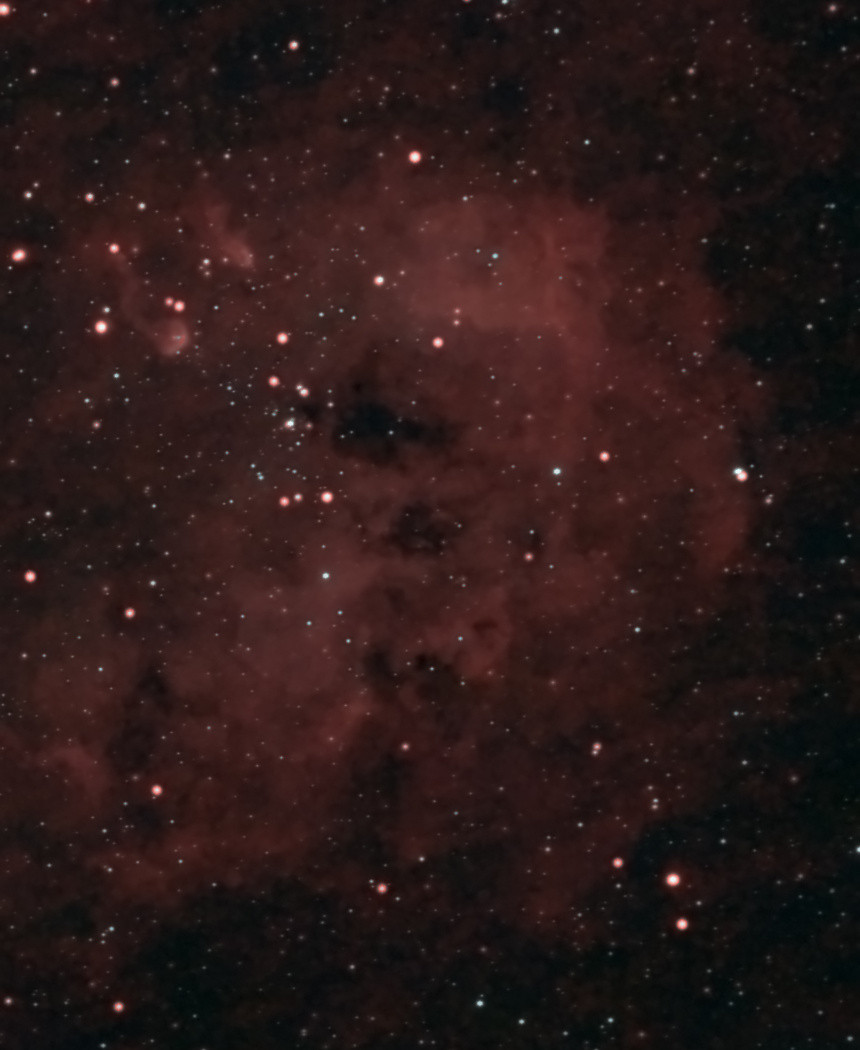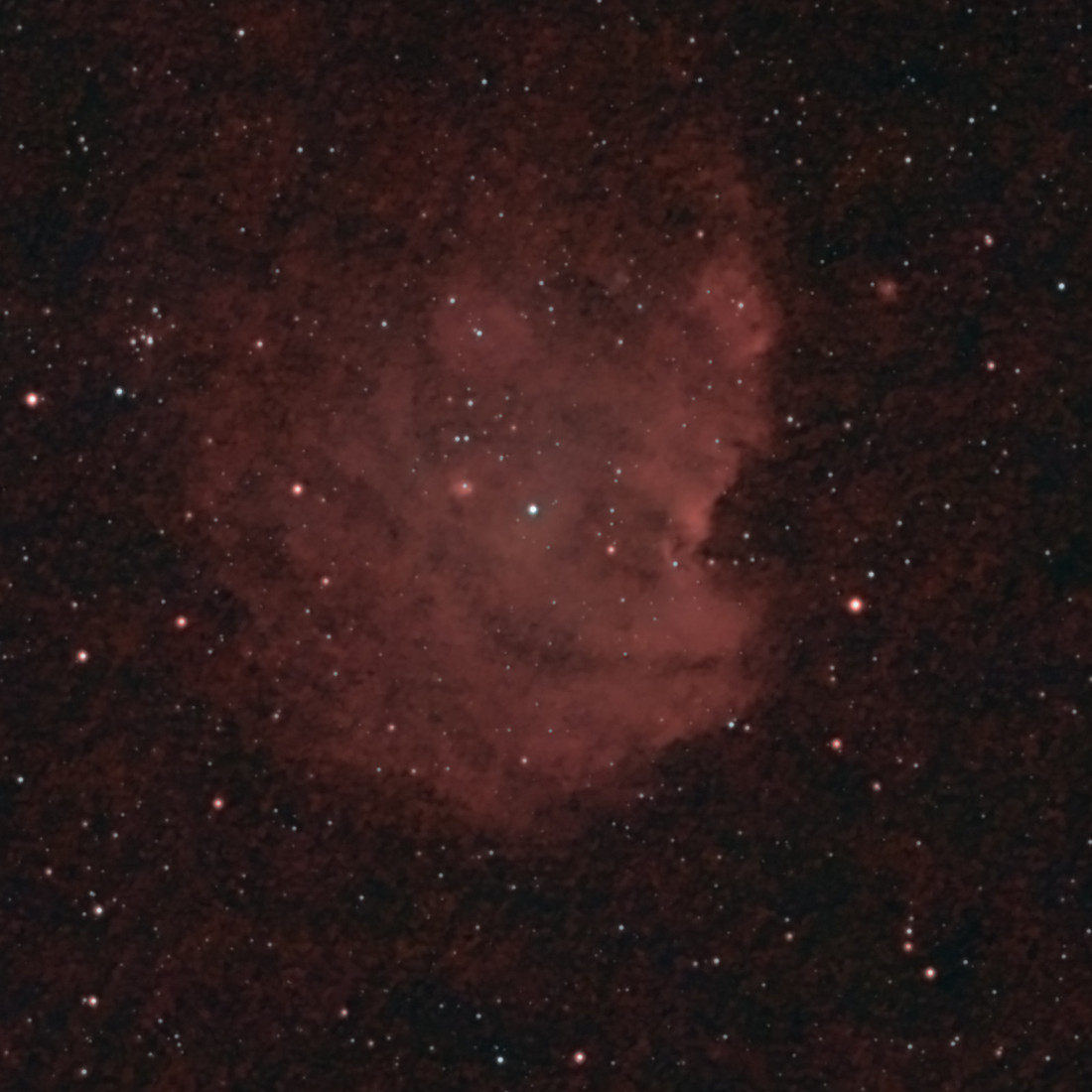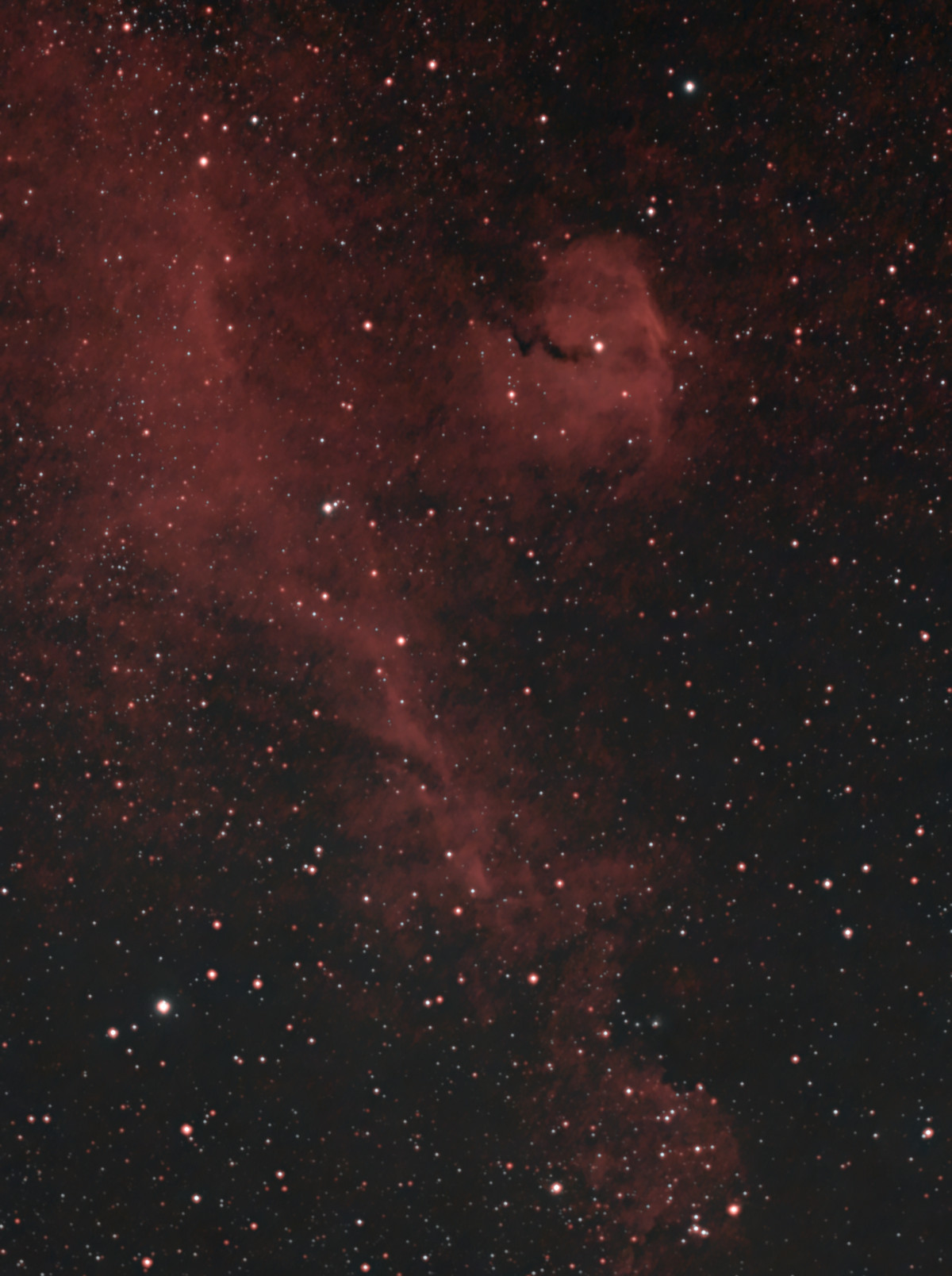
Sitreps Astronomy
Sharpless 2-157 — The Lobster Claw Nebula
A living entry: the second try on a faint cloud in Cassiopeia
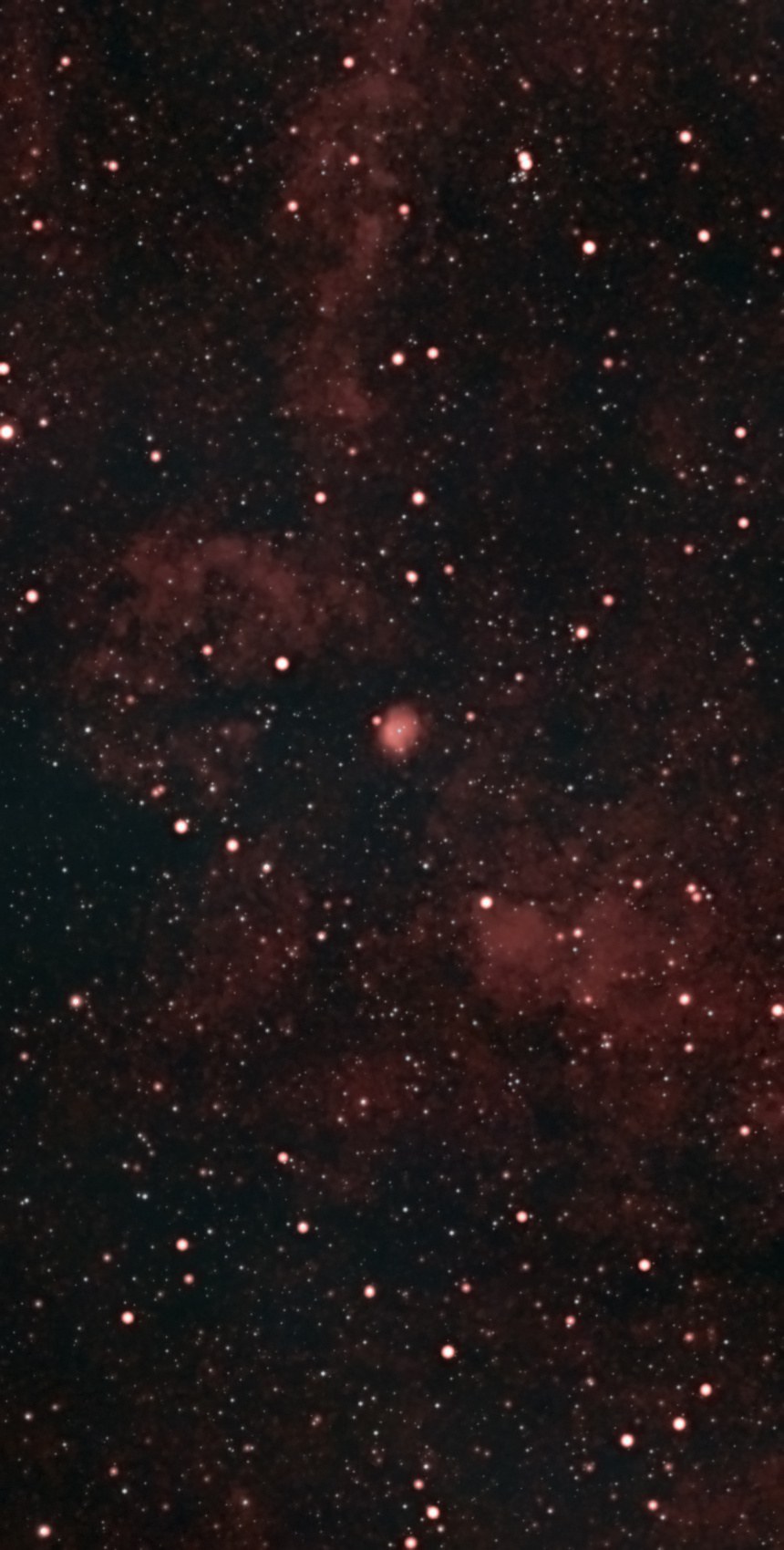
 Darth Vader (ZWO Seestar S50)
What you're looking at
Sharpless 2-157 is a large, faint cloud of glowing hydrogen in Cassiopeia, on the border with Cepheus, in the Perseus Arm of the Milky Way. Distance estimates range from about 8,000 to 12,000 light-years.
Part of it is a ring nebula, SG 13, around a small cluster of hot young stars that includes WR 157, a Wolf-Rayet star: a massive star late in its life, shedding its outer layers in a fierce wind. WR 157 is in the bright double star near the top of this frame. Radio and infrared studies find that the gas around the cluster fits a bubble blown by that wind.
The small round glow near the center is a separate, younger knot, catalogued as Sharpless 2-157 A and B. Radio and infrared surveys find newborn stars, masers and dense cores of cold dust there: a place where stars are forming now.
The lesson
The first night on this target produced almost nothing: wind trailed the stars, and the filter wheel was stuck on the wrong filter.
The second night, same telescope, same target, gave 2.9 clean hours.
A failed attempt is information, not a verdict. Fix what you can, check the conditions, and go again.
One photo. One lesson.
New entries land when the sky cooperates. Get them by email, plus the Sitreps jobs newsletter — no schedule, no spam. Unsubscribe from either one anytime.
Object data
- Catalog
- Sharpless 2-157 · ring: SG 13 · central knot: Sharpless 2-157 A/B
- Constellation
- Cassiopeia (on the Cepheus border)
- Type
- Emission nebula and wind-blown bubble
- Distance
- ~8,000–12,000 light-years (estimates vary)
- Size on the sky
- ~1.5° (Sharpless catalog); this frame holds the middle
- Powered by
- WR 157, a Wolf-Rayet star, and its young cluster
- Status
- LIVING ENTRY — 2.9 hours, one night; faint, needs many more nights