Sitreps Astronomy
NGC 2174 — The Monkey Head Nebula
A cloud Hubble photographed for its 24th birthday, from a backyard
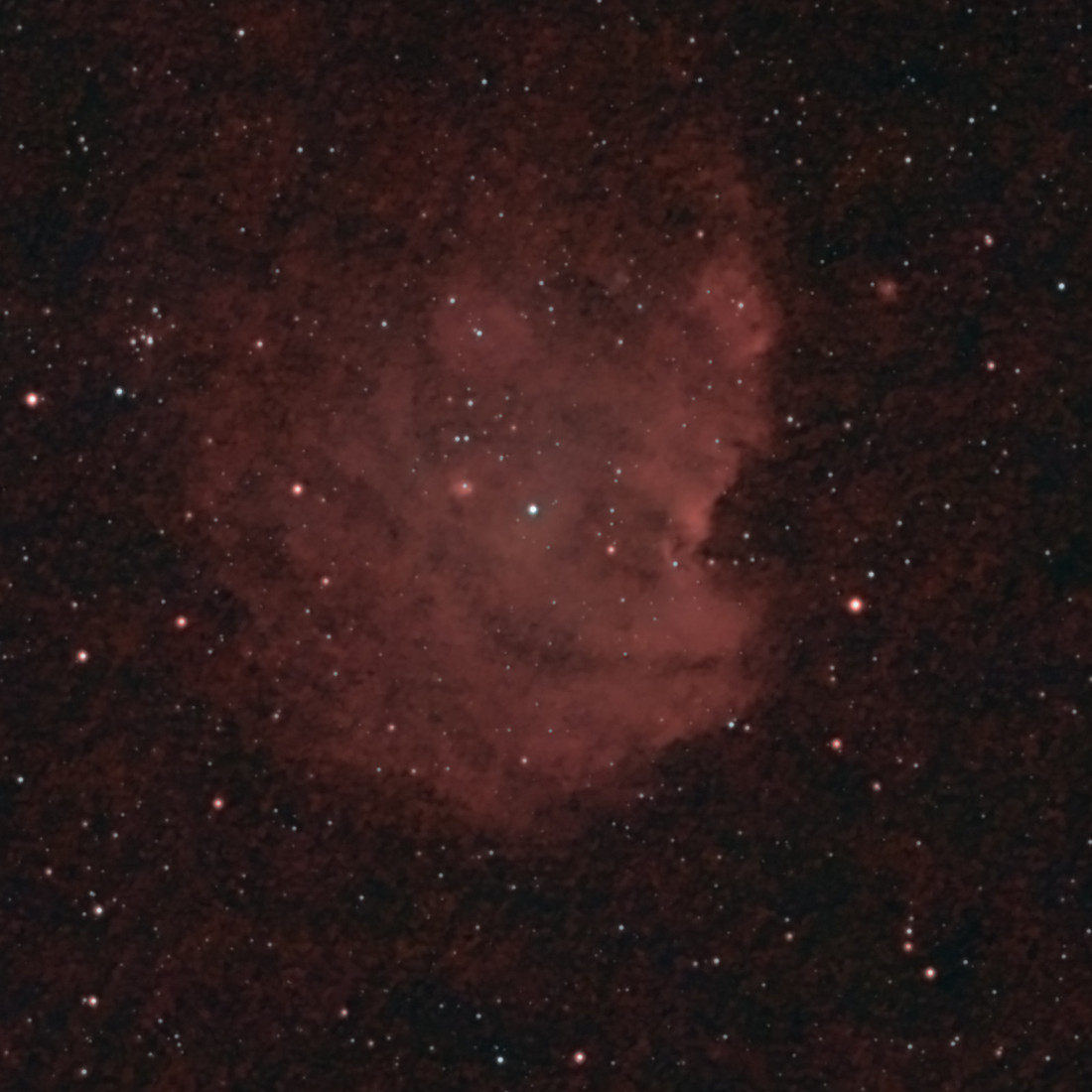
 Eva (ZWO Seestar S50 Pro)
What you're looking at
NGC 2174 is a cloud of hydrogen about 6,400 light-years away, in the north of Orion near the border with Gemini. The young star cluster inside it, NGC 2175, lights the gas from within.
Its edges are where the cloud is being eaten away. Ultraviolet light from the cluster boils gas off the dense parts; the dark notches are pockets of dust that are still holding out, and some will collapse into new stars before they are gone.
In 2014 the Hubble Space Telescope photographed part of it in infrared for its 24th anniversary. That picture covers a small piece of this one.
The lesson
Hubble has photographed this cloud. Its picture shows detail this one never will.
But Hubble’s frame covers a small patch of the nebula. To see the whole shape, the round head and the edge being eaten away, you need a wide view, and a 50-millimeter telescope has one.
A smaller tool isn’t a worse version of a big one. It answers a different question; pick the one that answers yours.
One photo. One lesson.
New entries land when the sky cooperates. Get them by email, plus the Sitreps jobs newsletter — no schedule, no spam. Unsubscribe from either one anytime.
Object data
- Catalog
- NGC 2174 · Sharpless 2-252 · cluster NGC 2175
- Constellation
- Orion (near the Gemini border)
- Type
- Emission nebula with a young open cluster
- Distance
- ~6,400 light-years
- Also photographed by
- Hubble Space Telescope, 24th anniversary image (2014)
- Status
- LIVING ENTRY — 7.5 hours, two nights; more hydrogen nights this winter