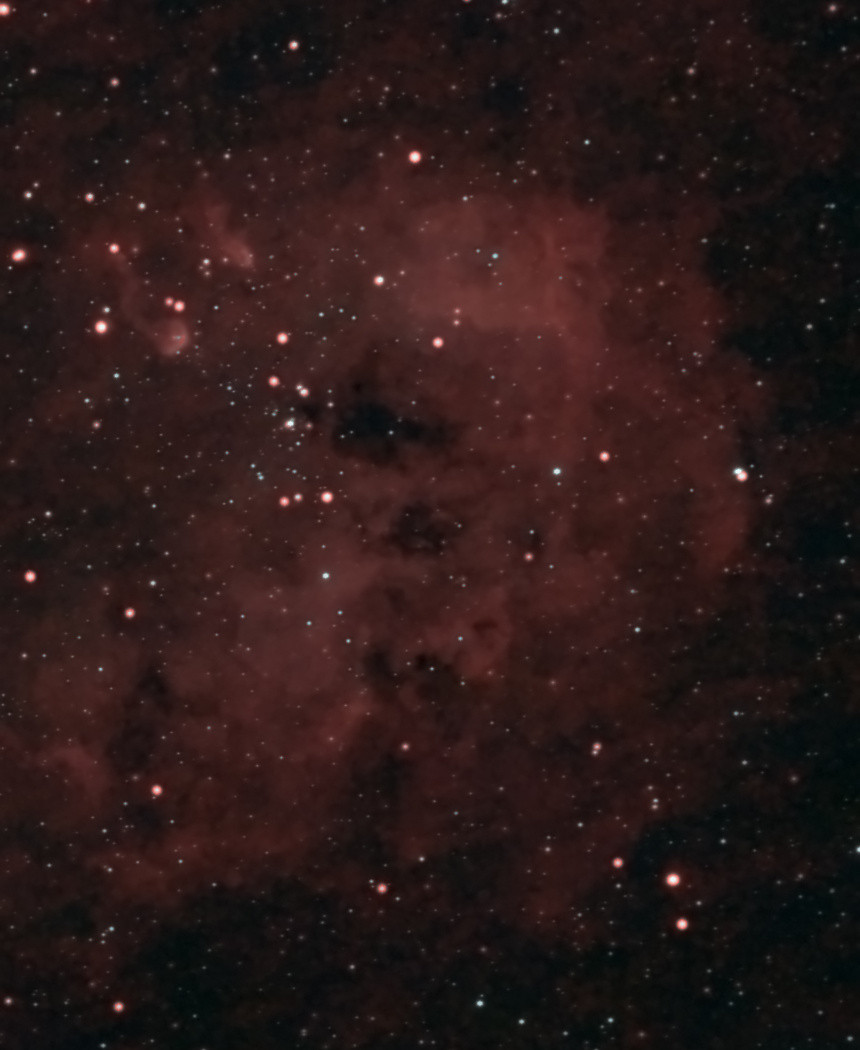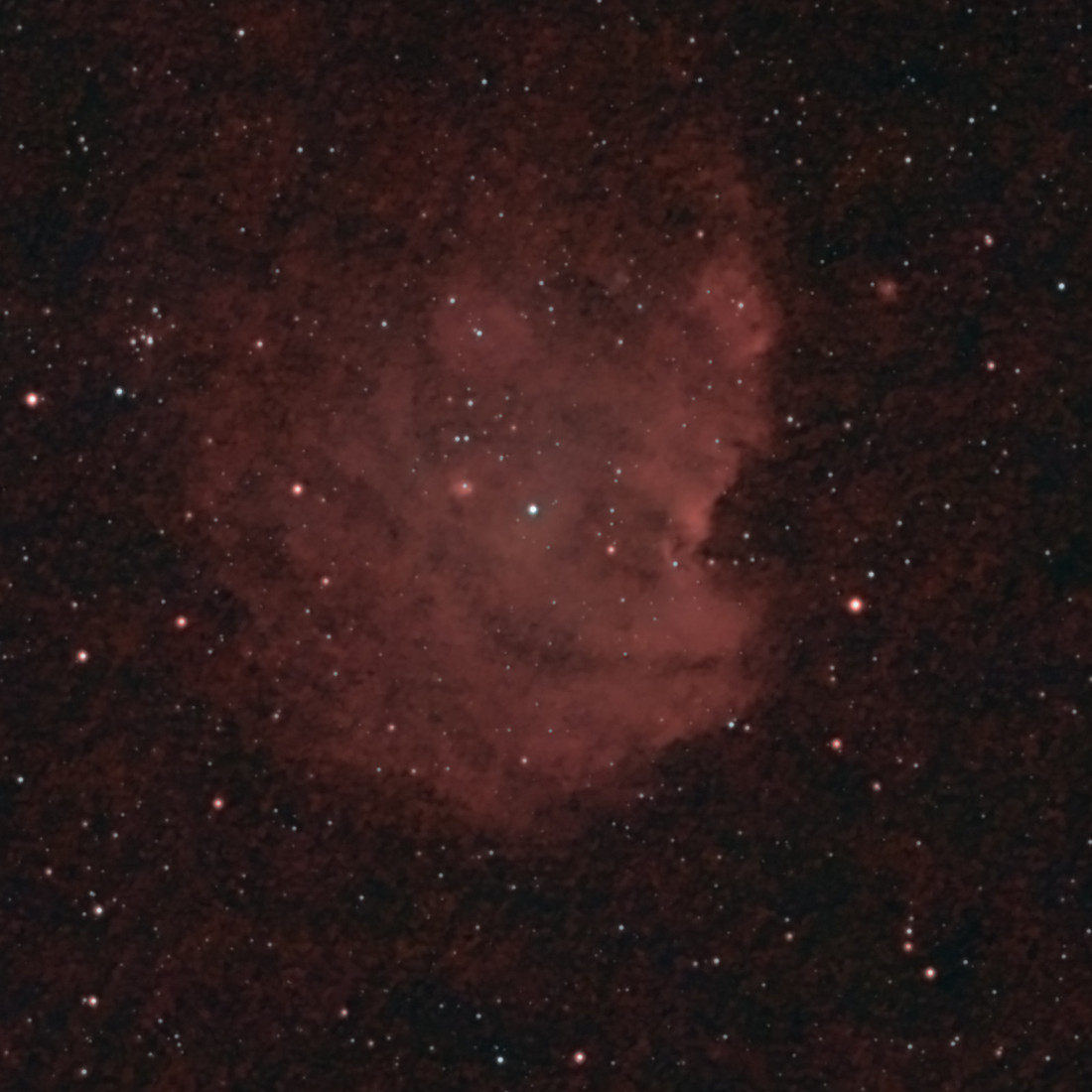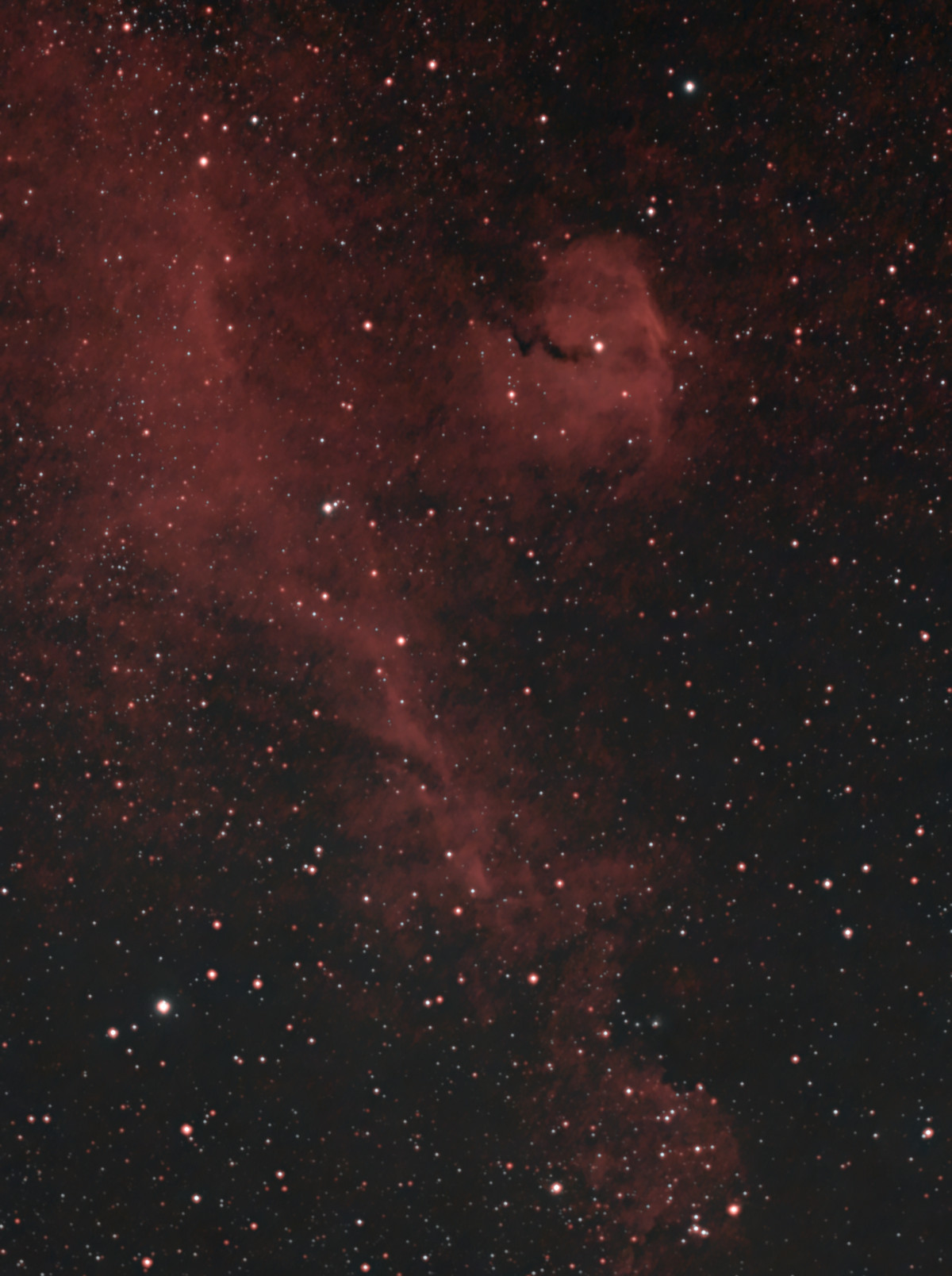
Sitreps Astronomy
Sharpless 2-129 — The Flying Bat Nebula
A faint shell of hydrogen, and the star that may power the Squid hiding inside it
 Eva (ZWO Seestar S50 Pro)
What you're looking at
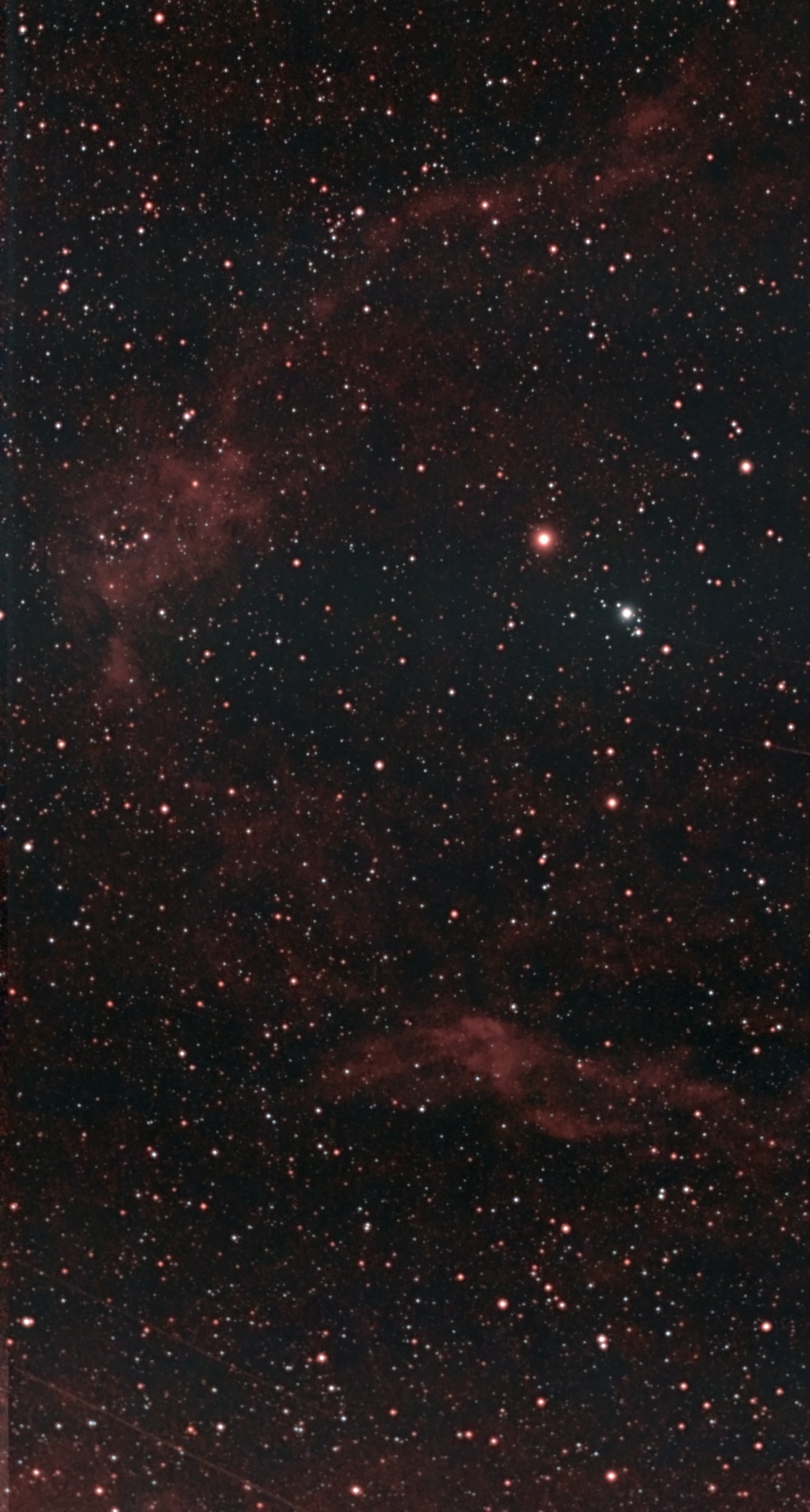
Sharpless 2-129 is a large, faint cloud of hydrogen in Cepheus, roughly 2,300 light-years away. Its full outline, a bat with spread wings, is about two degrees across; the red arcs in this frame are parts of its shell.
Hidden inside it is the Squid Nebula, Ou4, found in 2011 by the French amateur astronomer Nicolas Outters. It glows almost only in the light of doubly ionized oxygen, and it is so faint that it does not show in this picture at all.
The bright blue-white star right of center is HR 8119, a triple system of hot young stars. One explanation for the Squid is an outflow of gas driven by these stars; another is an old planetary nebula that just happens to lie in the same direction. The question is still open.
The lesson
The first night on this target aimed at the middle of the bat. The middle of the bat is mostly empty sky, and the picture came back nearly blank.
The second plan moved the frame onto the faint arcs of the shell, where the light actually is, and kept it there for two nights.
Aim at where the signal is, not at the center of the label.
One photo. One lesson.
New entries land when the sky cooperates. Get them by email, plus the Sitreps jobs newsletter — no schedule, no spam. Unsubscribe from either one anytime.
Object data
- Catalog
- Sharpless 2-129 · Squid Nebula: Ou4
- Constellation
- Cepheus
- Type
- Emission nebula (hydrogen); the Squid glows in oxygen
- Distance
- ~2,300 light-years
- Size on the sky
- About 2°; this frame holds part of the shell
- Squid’s central star
- HR 8119, a triple system of hot young stars
- Status
- LIVING ENTRY — 6.6 hours, two nights; more hydrogen nights, and many oxygen nights for the Squid