Sitreps Astronomy
IC 2177 — The Seagull Nebula
Shot last on purpose: the one target that had to wait until the small hours
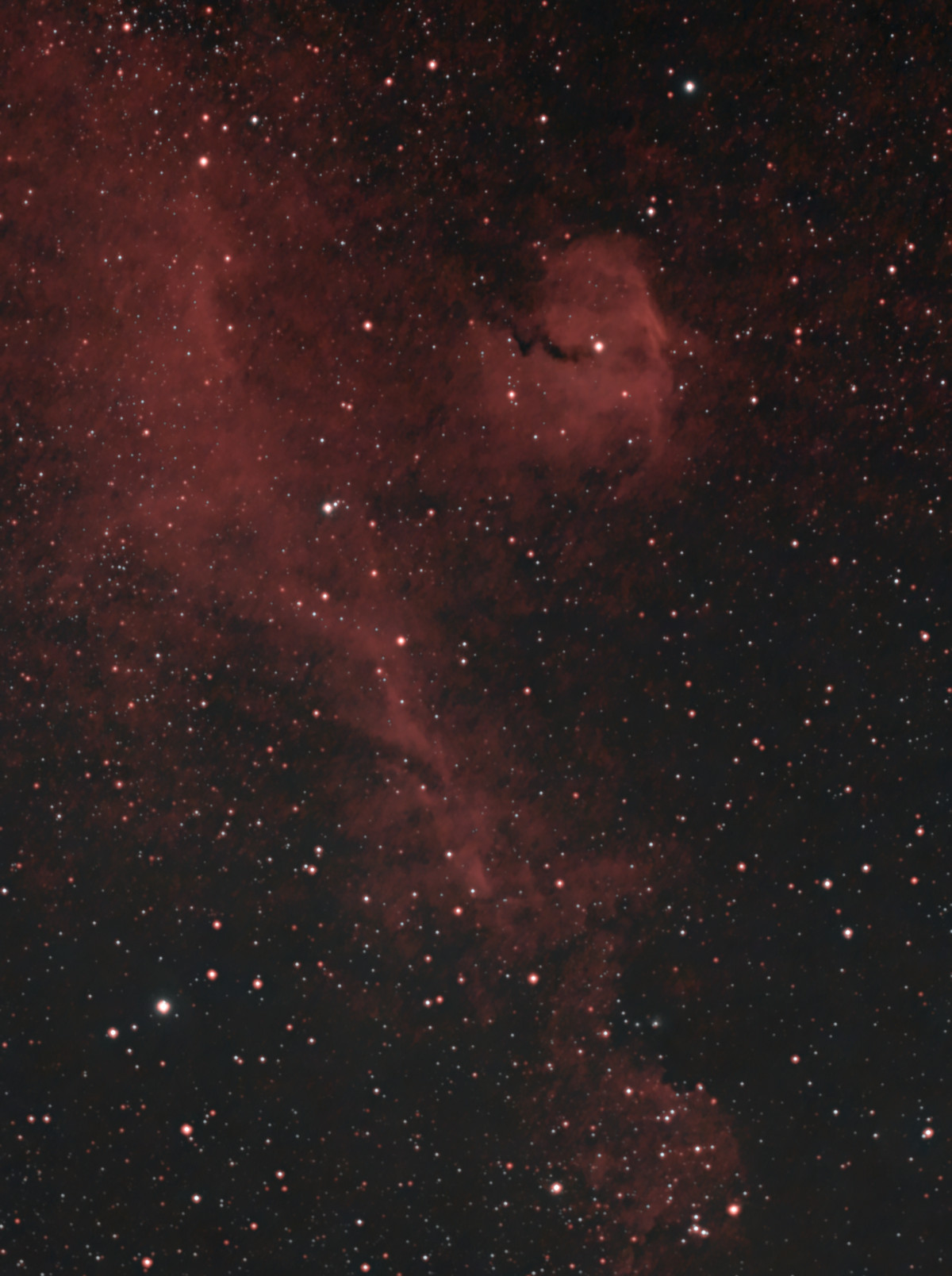
 Eva (ZWO Seestar S50 Pro)
What you're looking at
The Seagull is a cloud of hydrogen about 3,700 light-years away, on the border between Monoceros and Canis Major. Its full shape, a gull with spread wings, spans about two and a half degrees, five full moons.
The bright head, Sharpless 2-292, is lit by a single young, massive star inside it, HD 53367: the gull’s eye. The thin dark lane across the head is dust in front of the glowing gas.
The wings are a separate, larger glow, lit by other hot young stars in the region. Together they are part of a long chain of star-forming clouds running along this stretch of the Milky Way.
The lesson
One version of this night’s plan put the Seagull first. It couldn’t go there: at dusk it was still below the horizon, and it didn’t reach its highest point until about 4 a.m.
So it went last, on the telescope with the wider frame, from just before its highest point until dawn.
The order of the work isn’t up to you alone. Some jobs have a window; build the plan around the windows, then fill in the rest.
One photo. One lesson.
New entries land when the sky cooperates. Get them by email, plus the Sitreps jobs newsletter — no schedule, no spam. Unsubscribe from either one anytime.
Object data
- Catalog
- IC 2177 · wings: Sharpless 2-296 · head: Sharpless 2-292
- Constellation
- Monoceros / Canis Major border
- Type
- Emission nebula
- Distance
- ~3,700 light-years
- Size on the sky
- ~2.5°, five full moons; this frame holds the head and part of the wing
- Lit by
- HD 53367, a young massive star in the head
- Status
- LIVING ENTRY — 1.9 hours, one night; the full wingspan needs a mosaic