The Veil Nebula — the Full Loop
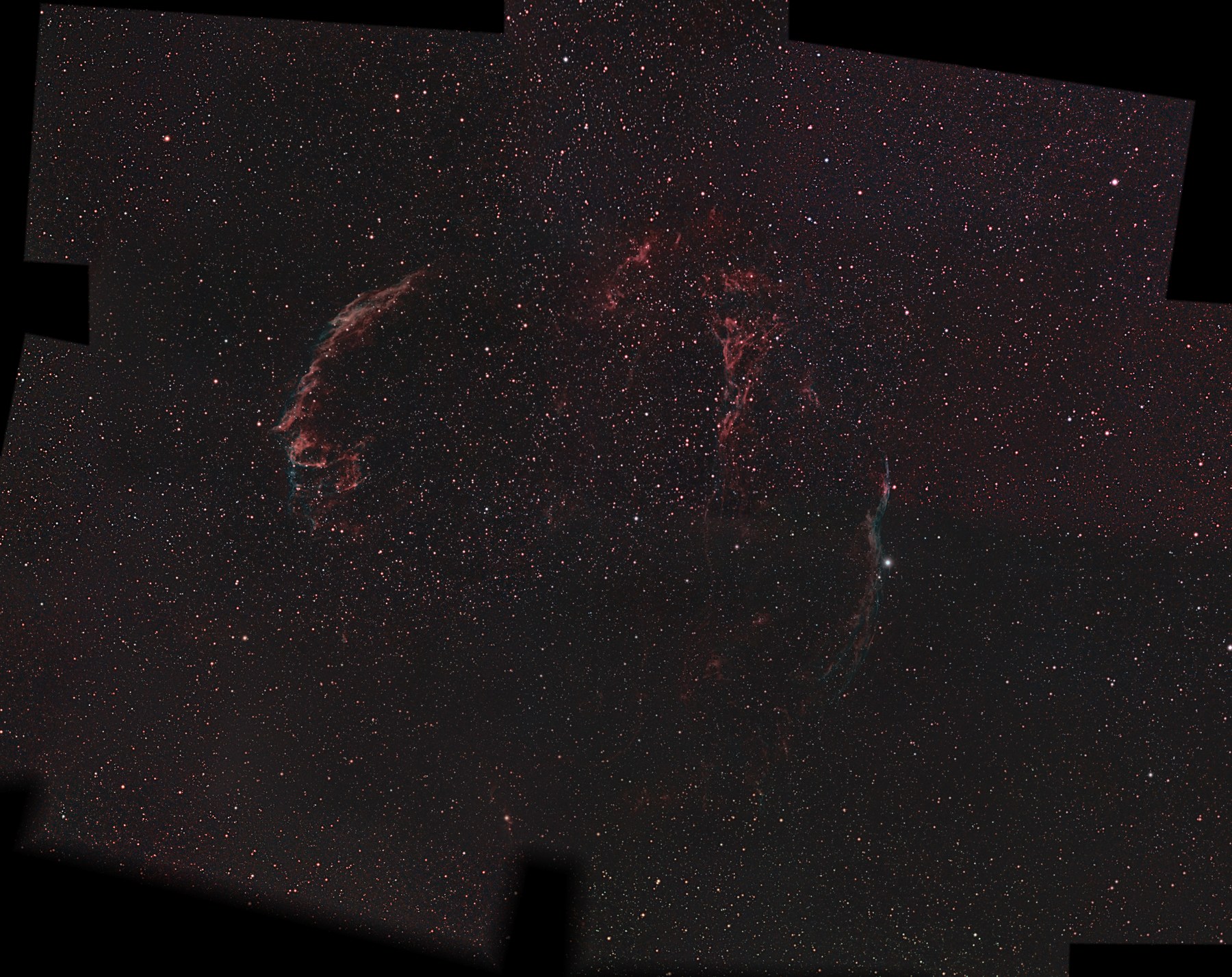
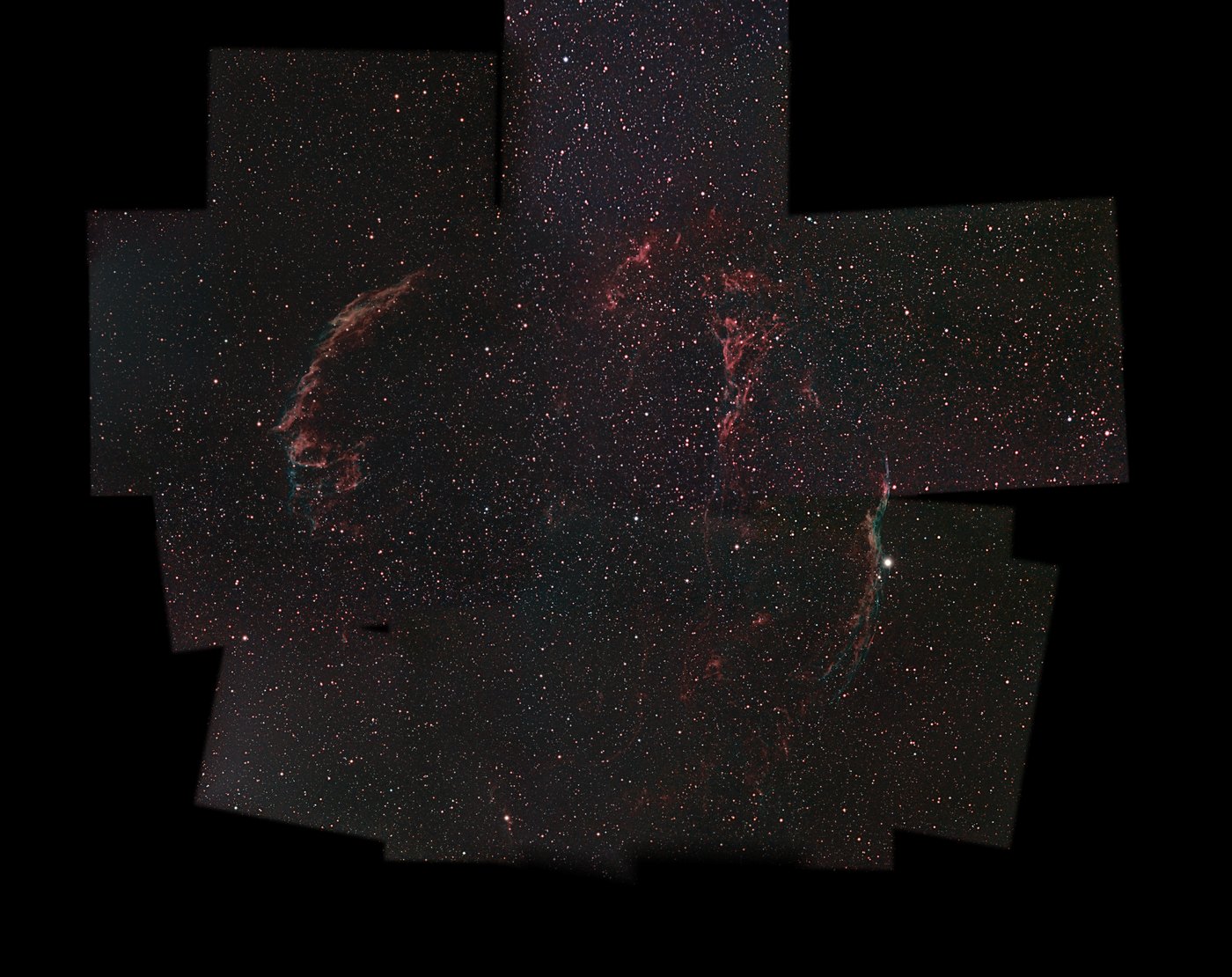
Nineteen frames, two telescopes: a 10,000-year-old explosion, squared off for print

 Eva (ZWO Seestar S50 Pro) + Darth Vader (Seestar S50)
What you're looking at
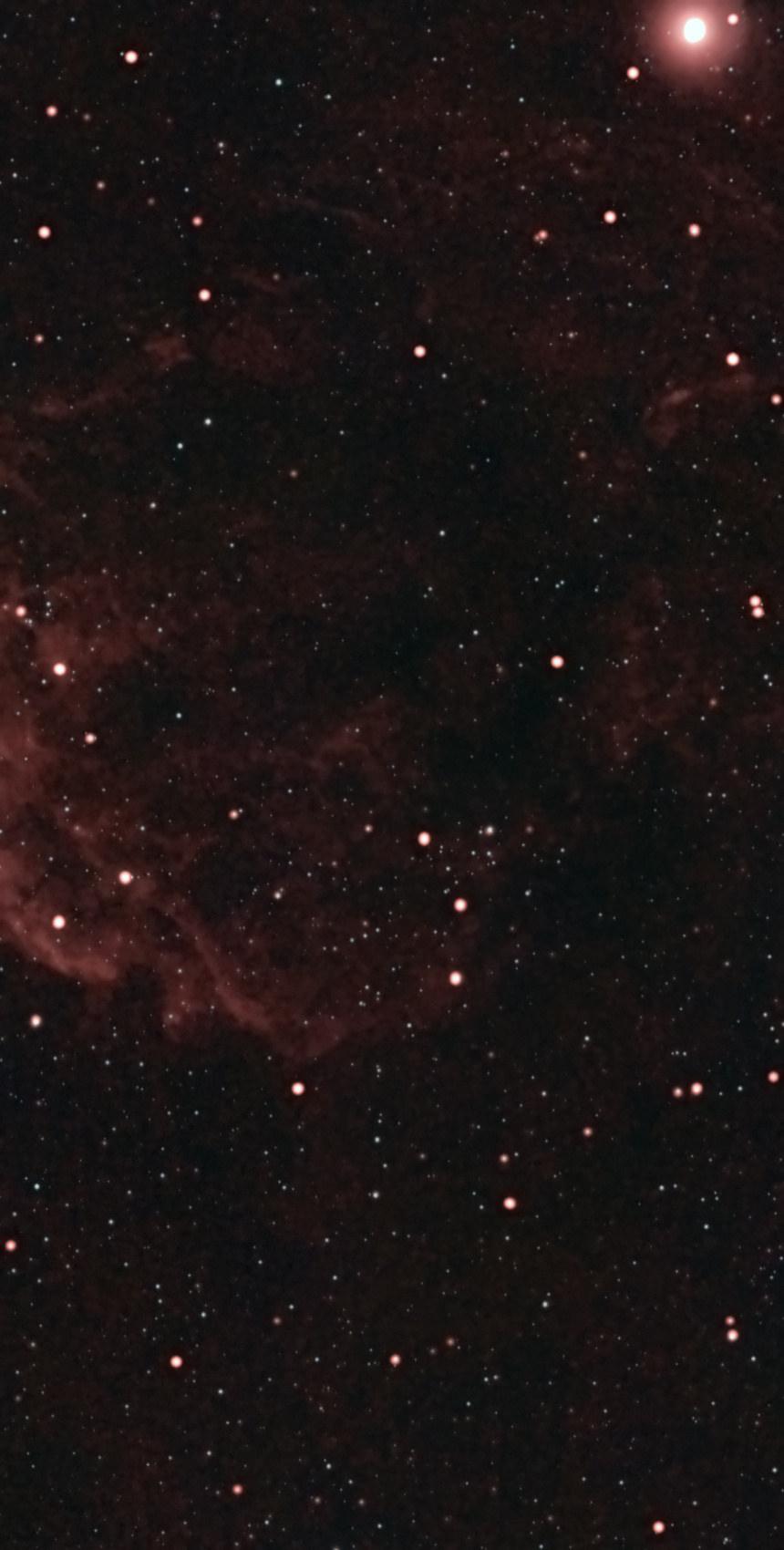
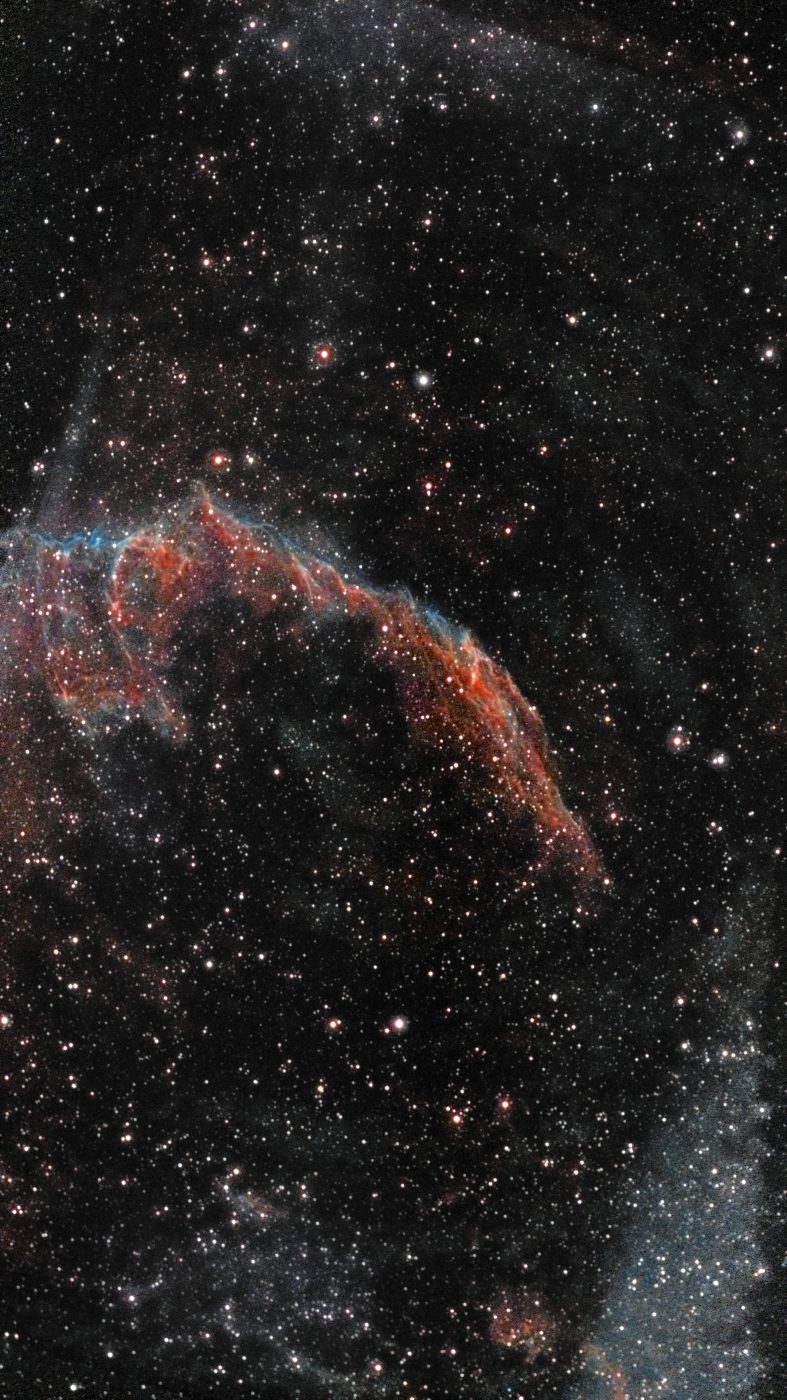
The Veil is the Cygnus Loop: the expanding shell of a star that exploded about 10,000 years ago, roughly 2,400 light-years away. The blast wave is still running outward through thin interstellar gas, and where it hits denser clumps the shocked gas glows, red from hydrogen, teal from oxygen.
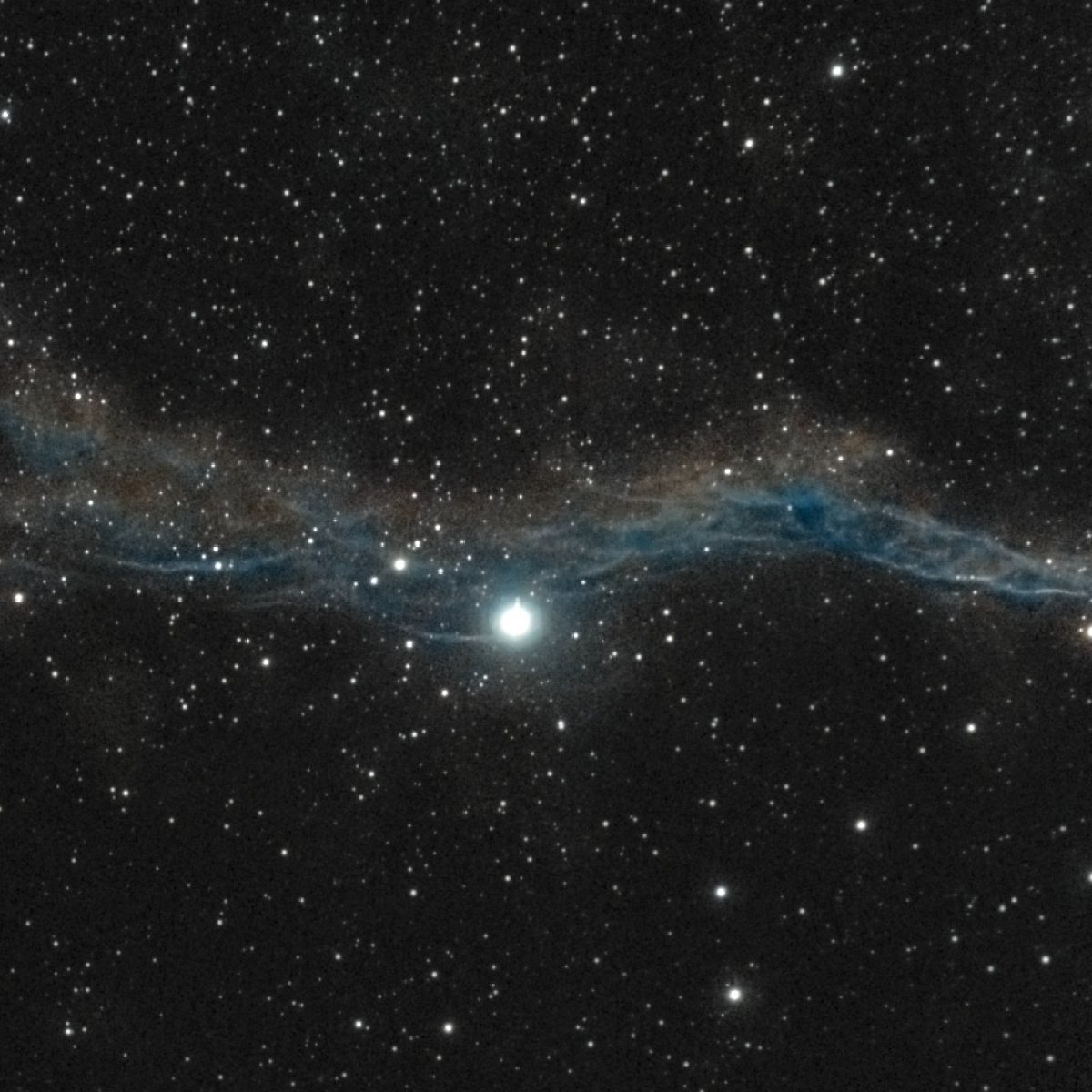
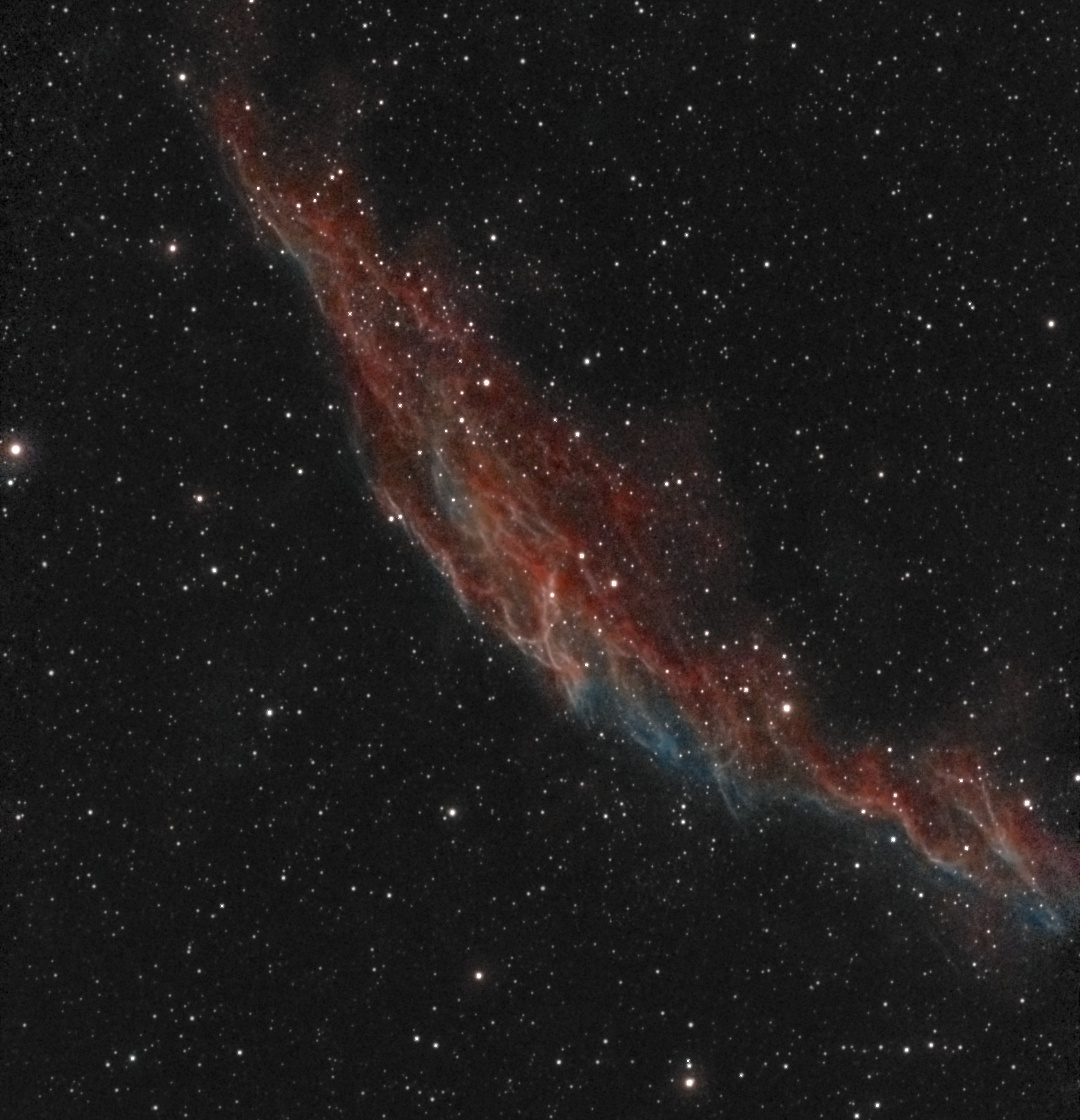
The full loop is about three degrees across, six full moons, so no single frame of a small telescope holds it. The arcs that have names, the Eastern Veil, the Western Veil and Pickering’s Triangle, are just the brightest stretches of one continuous ring.
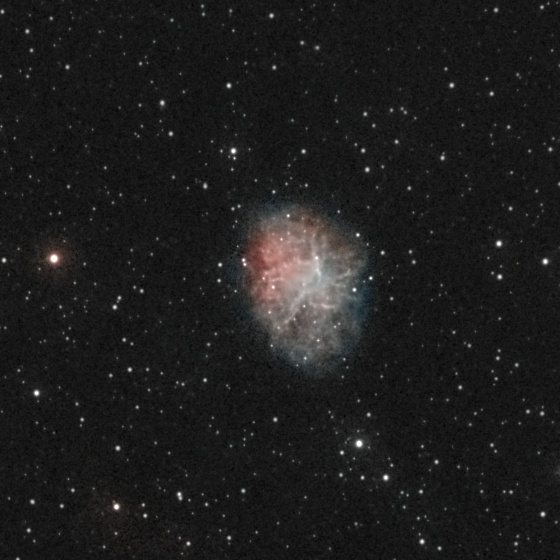
With the Crab and the Jellyfish, it completes the journal’s supernova timeline: the Crab at 1,000 years, compact and still electric; the Veil at 10,000, spread across the sky; the Jellyfish at 30,000 or more, dissolving into the clouds it hit.
The lesson
Two days ago this was an unfinished picture, published on purpose, with the gaps showing exactly where the next nights would go. The nights filled them.
It took ten sessions on two telescopes, and the first six were shot before I knew they’d end up as one image. The early frames weren’t wasted; they were inventory, waiting for a plan big enough to use them.
Most long projects look like this from the inside. Do the next panel.
How this mosaic came together
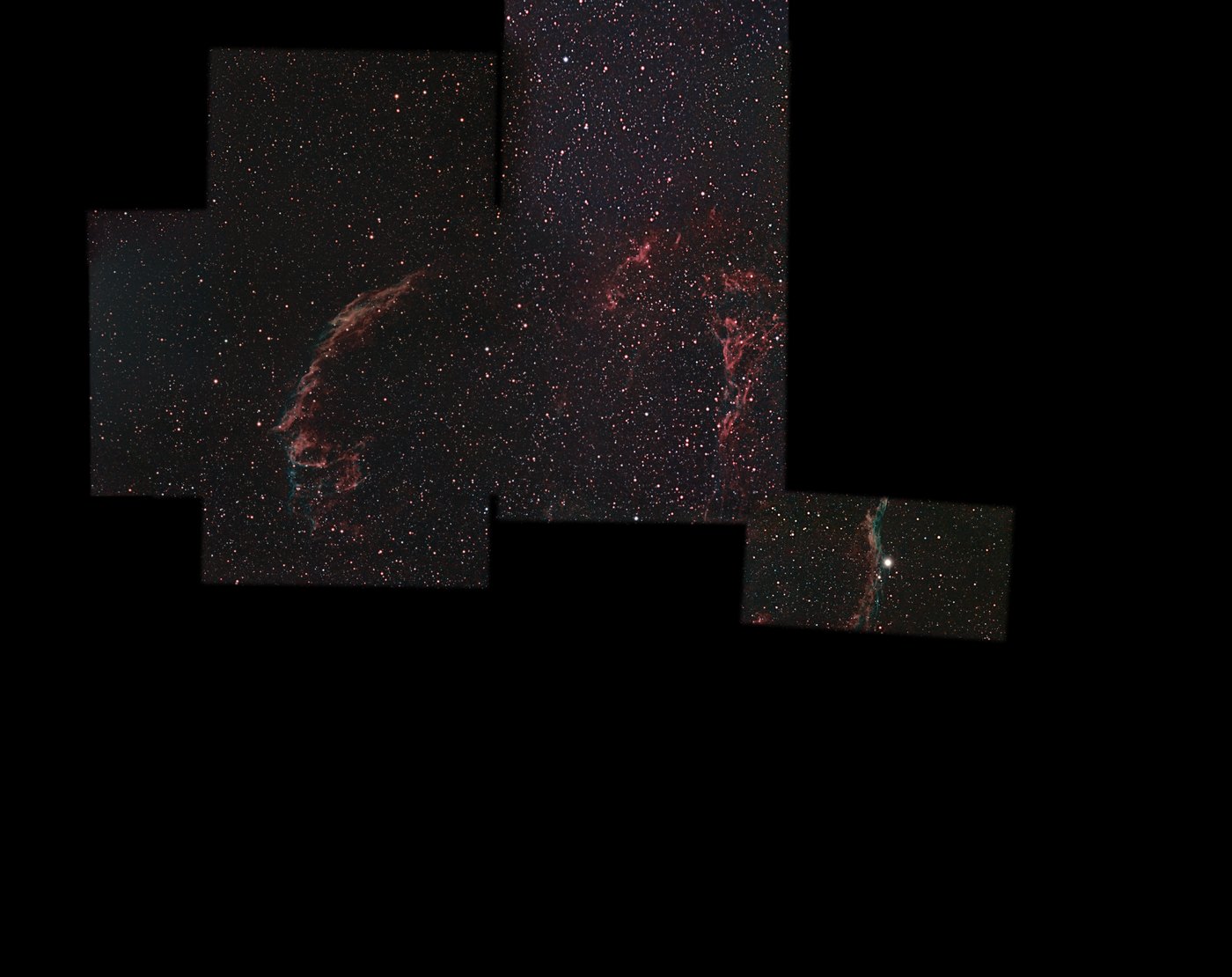
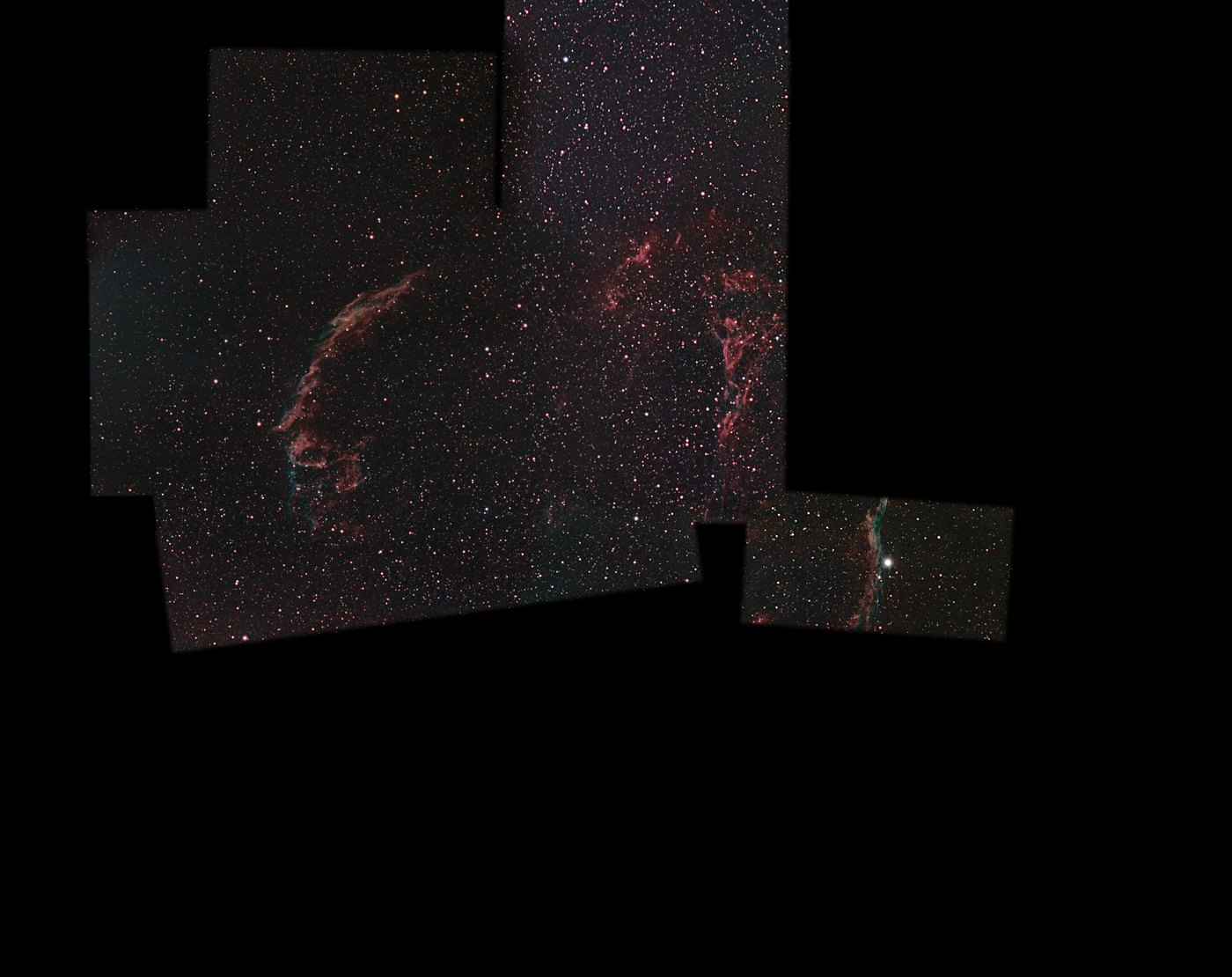
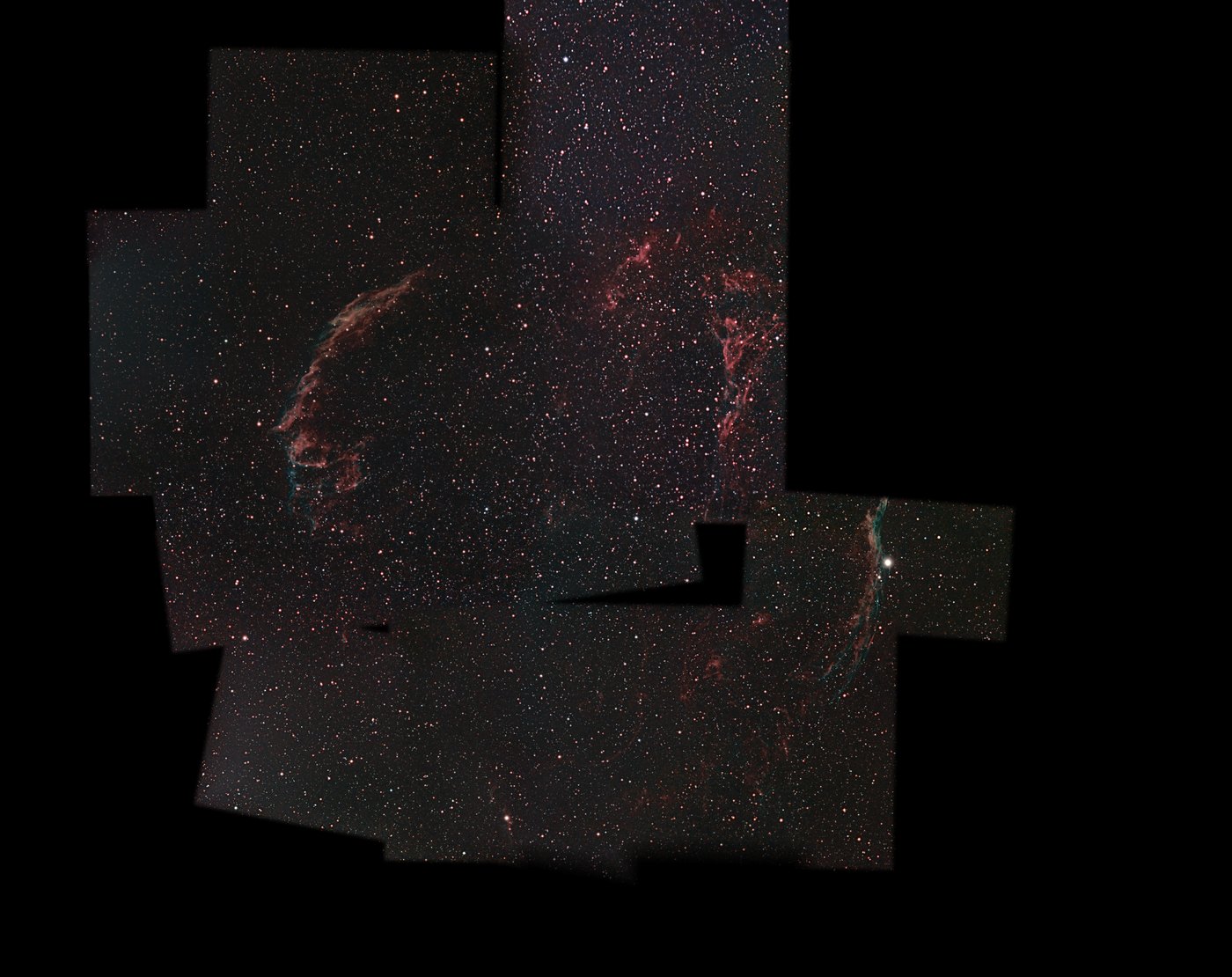
The first five frames were separate shoots from September and October, taken before there was any plan to join them. Everything after that was planned panel by panel and shot by the telescope robot. Tap a date to see the mosaic as it stood that morning.
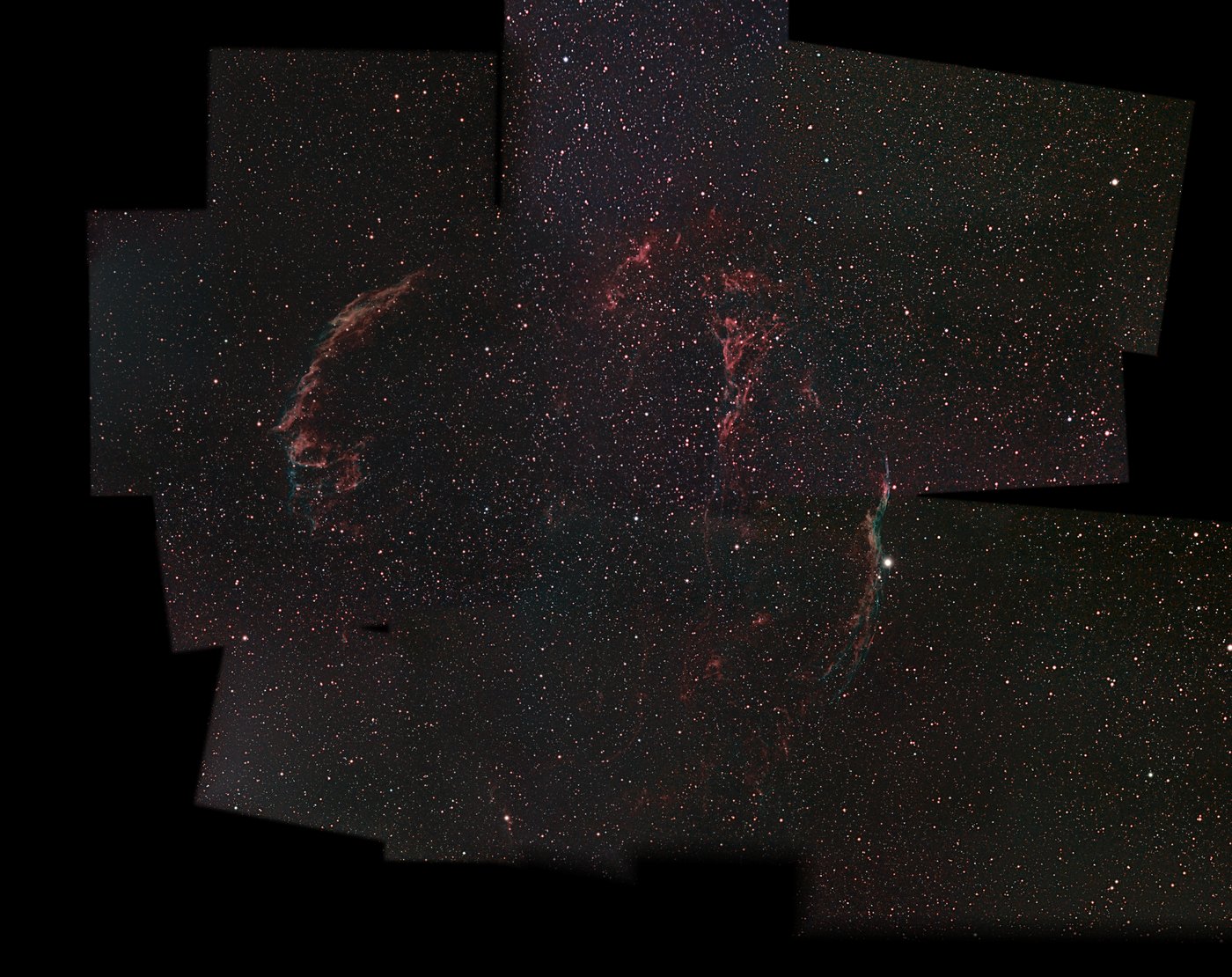
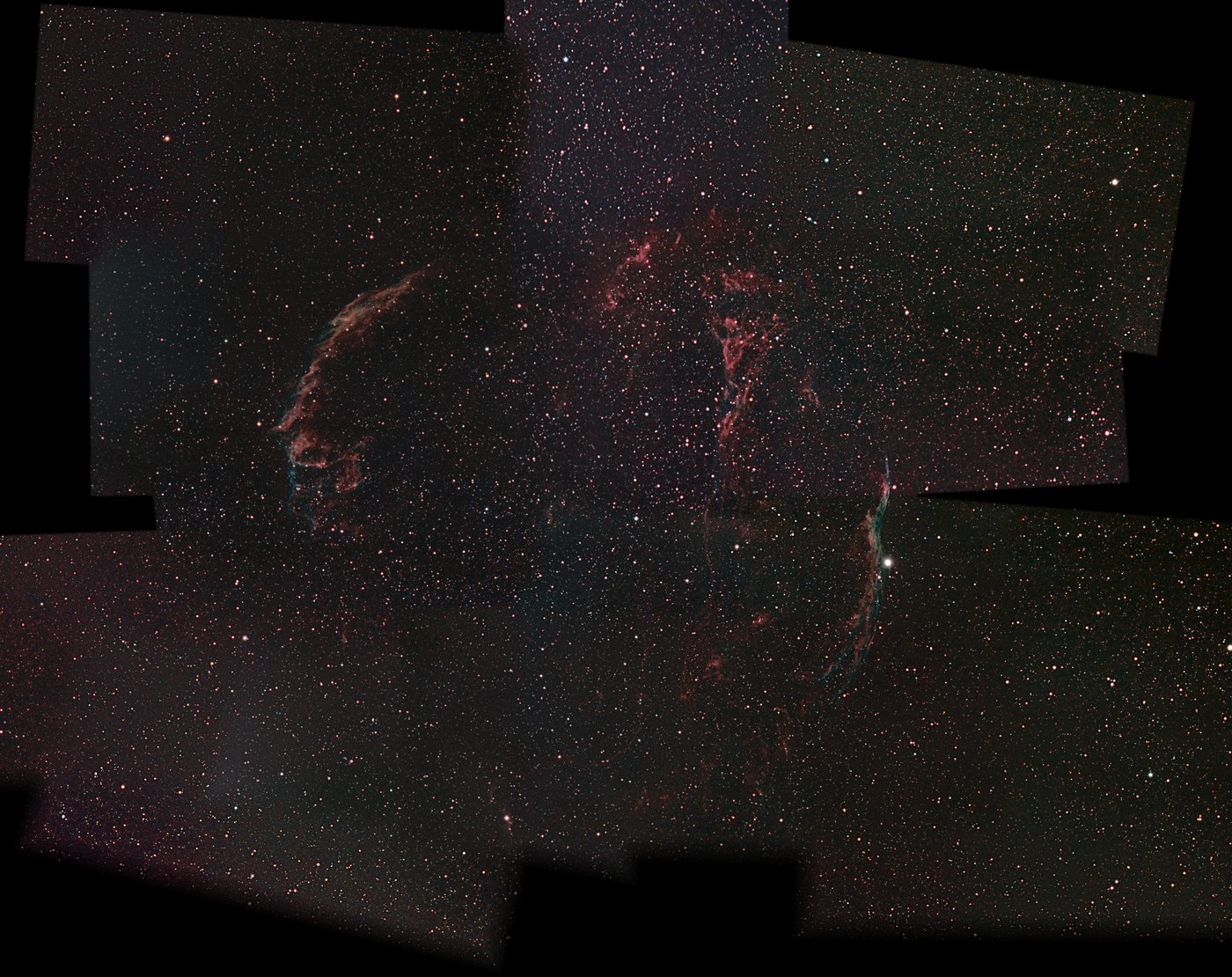
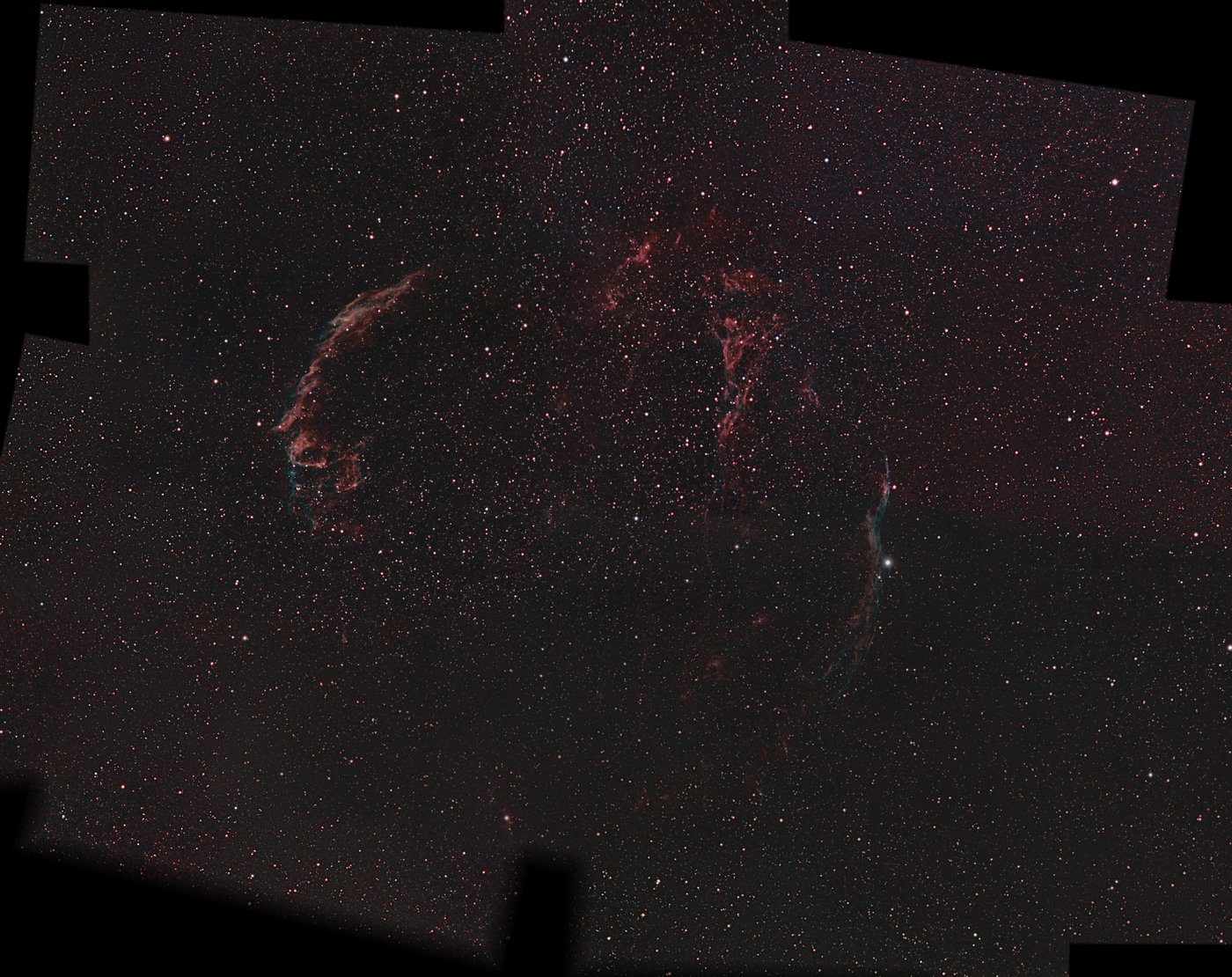
Zoom in on The Veil Nebula
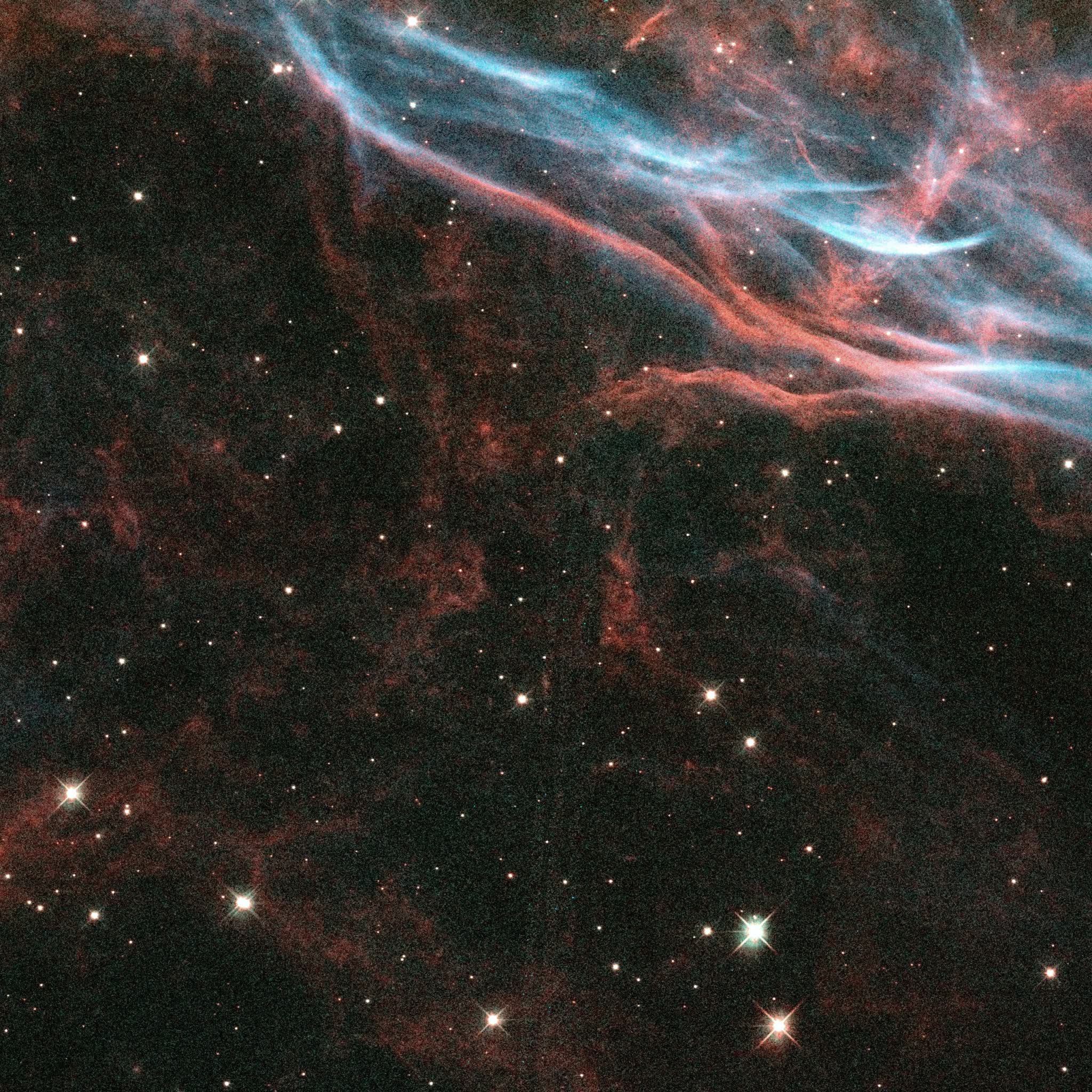
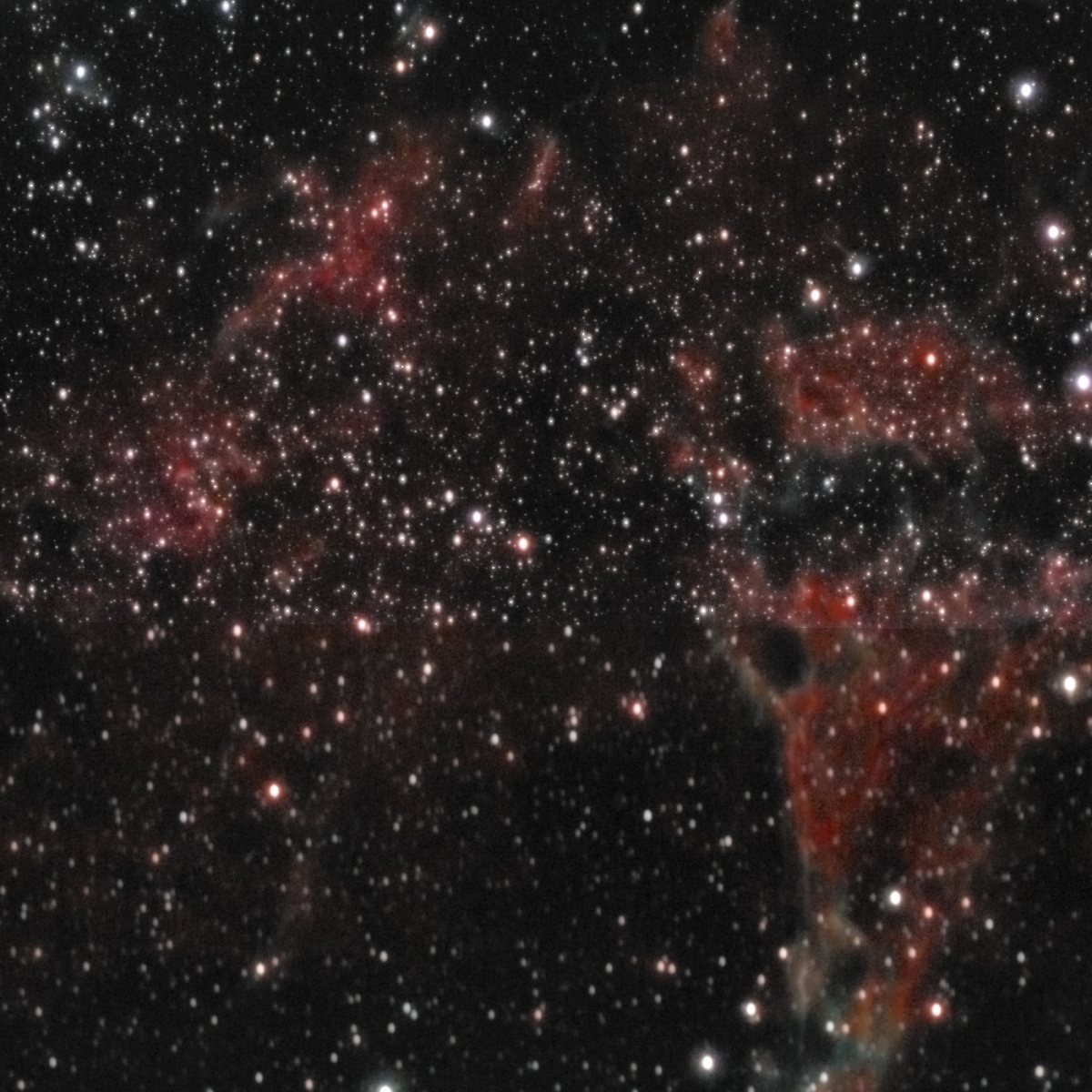
Closer looks at pieces of this mosaic, each with its own page and story.
One photo. One lesson.
New entries land when the sky cooperates. Get them by email, plus the Sitreps jobs newsletter — no schedule, no spam. Unsubscribe from either one anytime.
Object data
- Object
- The Cygnus Loop (NGC 6960, 6992/6995, Pickering’s Triangle)
- Constellation
- Cygnus
- Type
- Supernova remnant
- Age
- ~10,000 years
- Frames
- 19 (17 × S50 Pro, 2 × S50), 1,401 minutes
- Status
- Complete: a full print rectangle, covered edge to edge