The Heart & Soul — the Widefield Mosaic
Eighteen panels, three star factories, 36 hours of light

 Eva (ZWO Seestar S50 Pro) + Darth Vader (Seestar S50)
What you're looking at
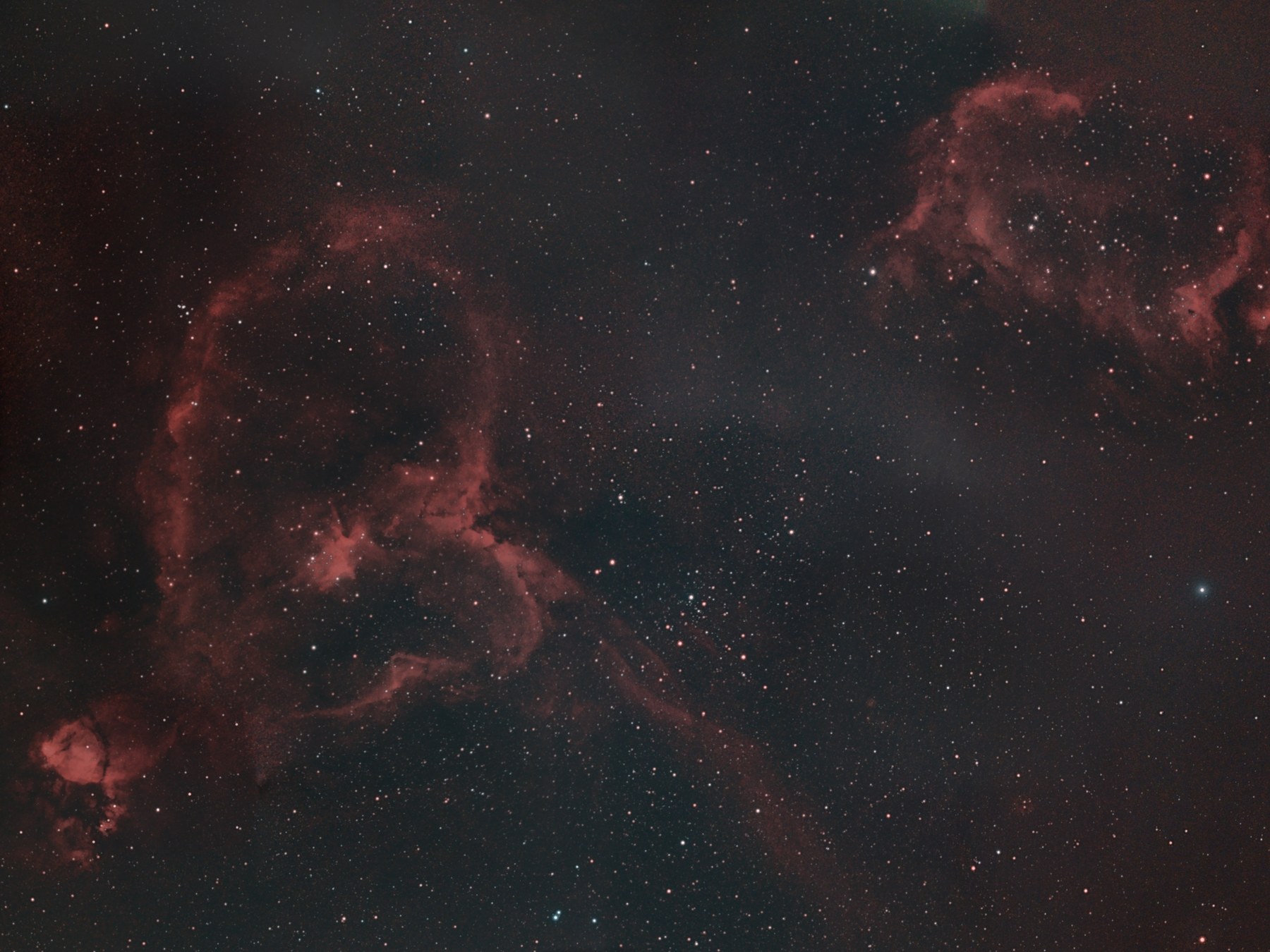
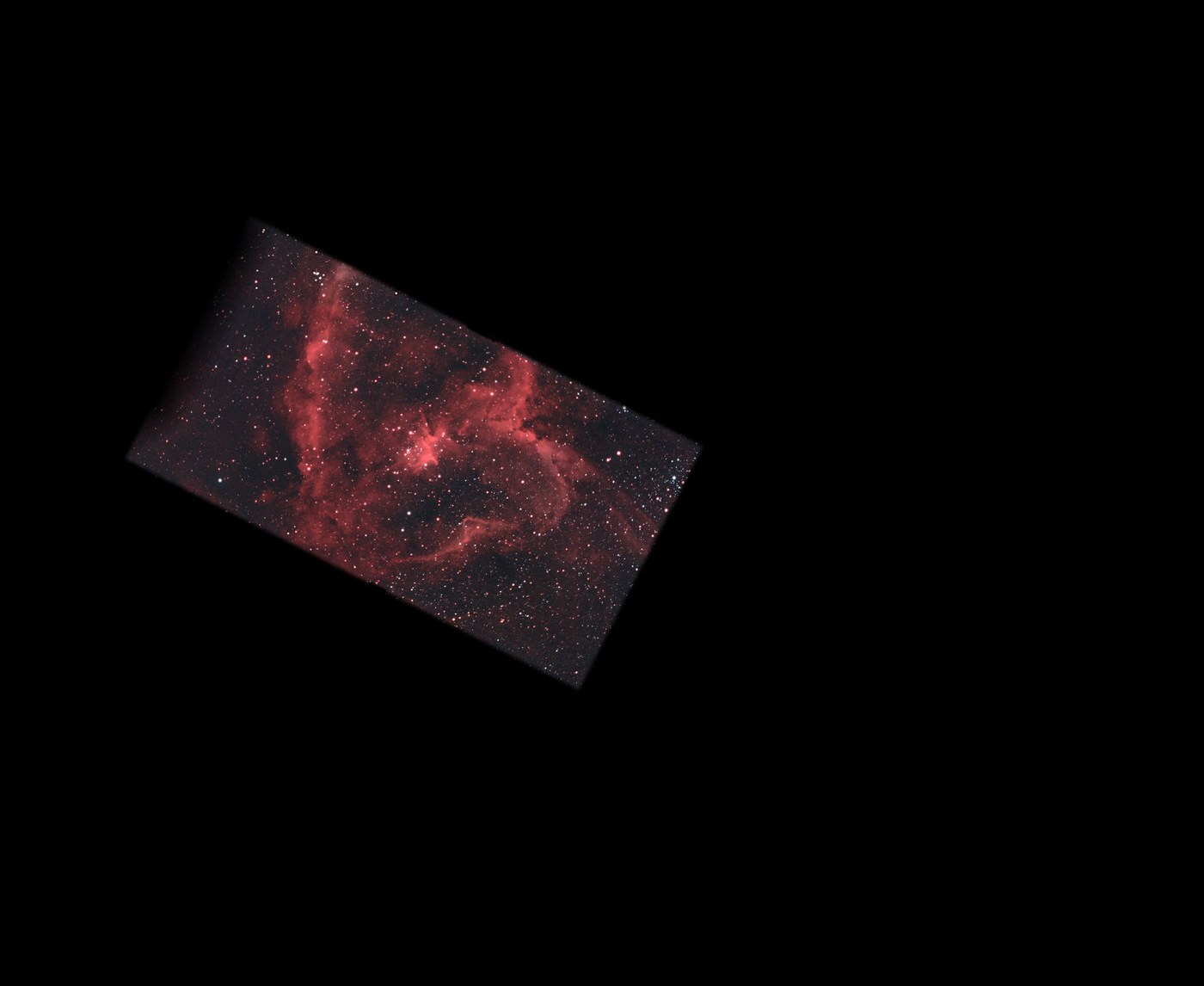
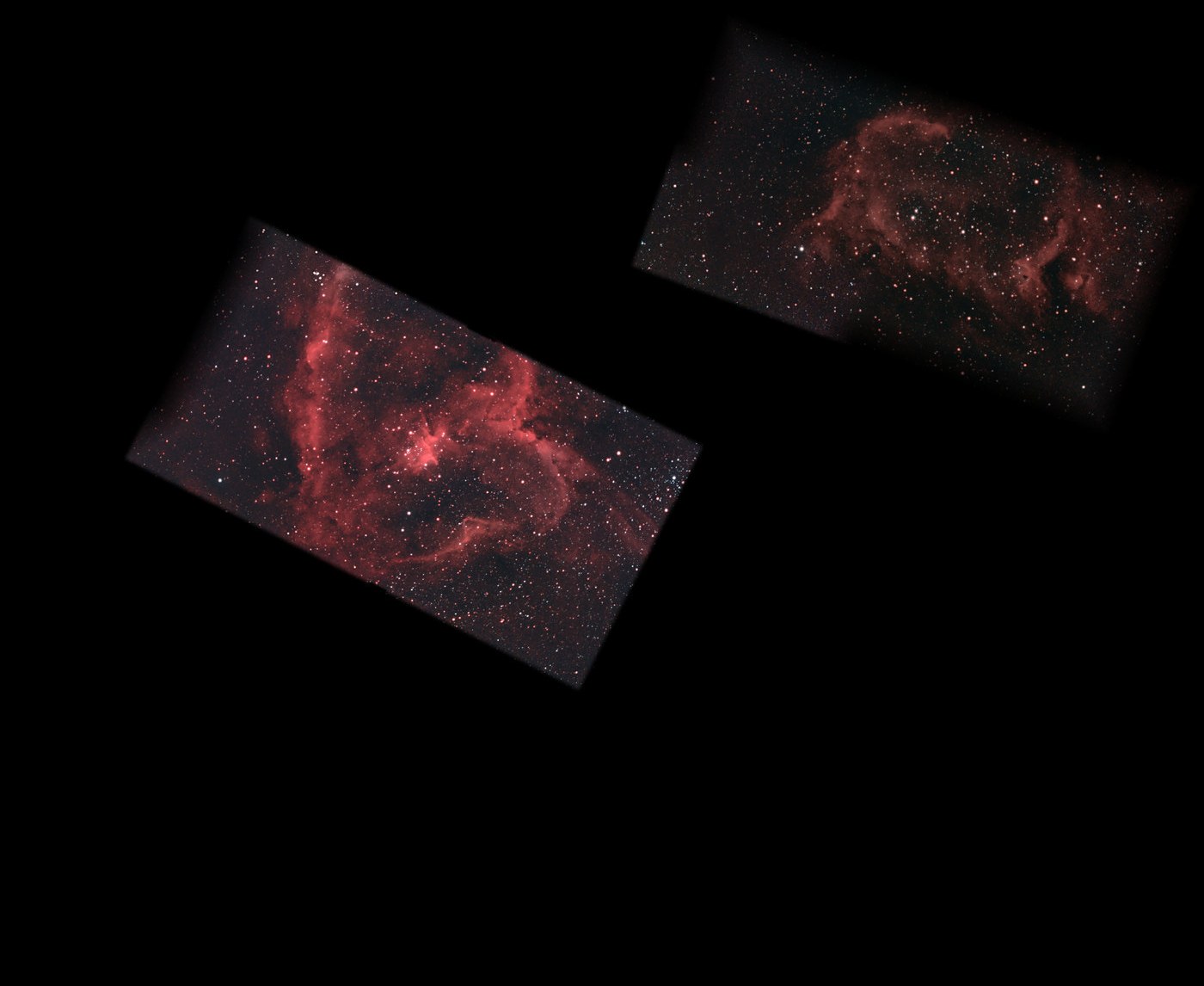
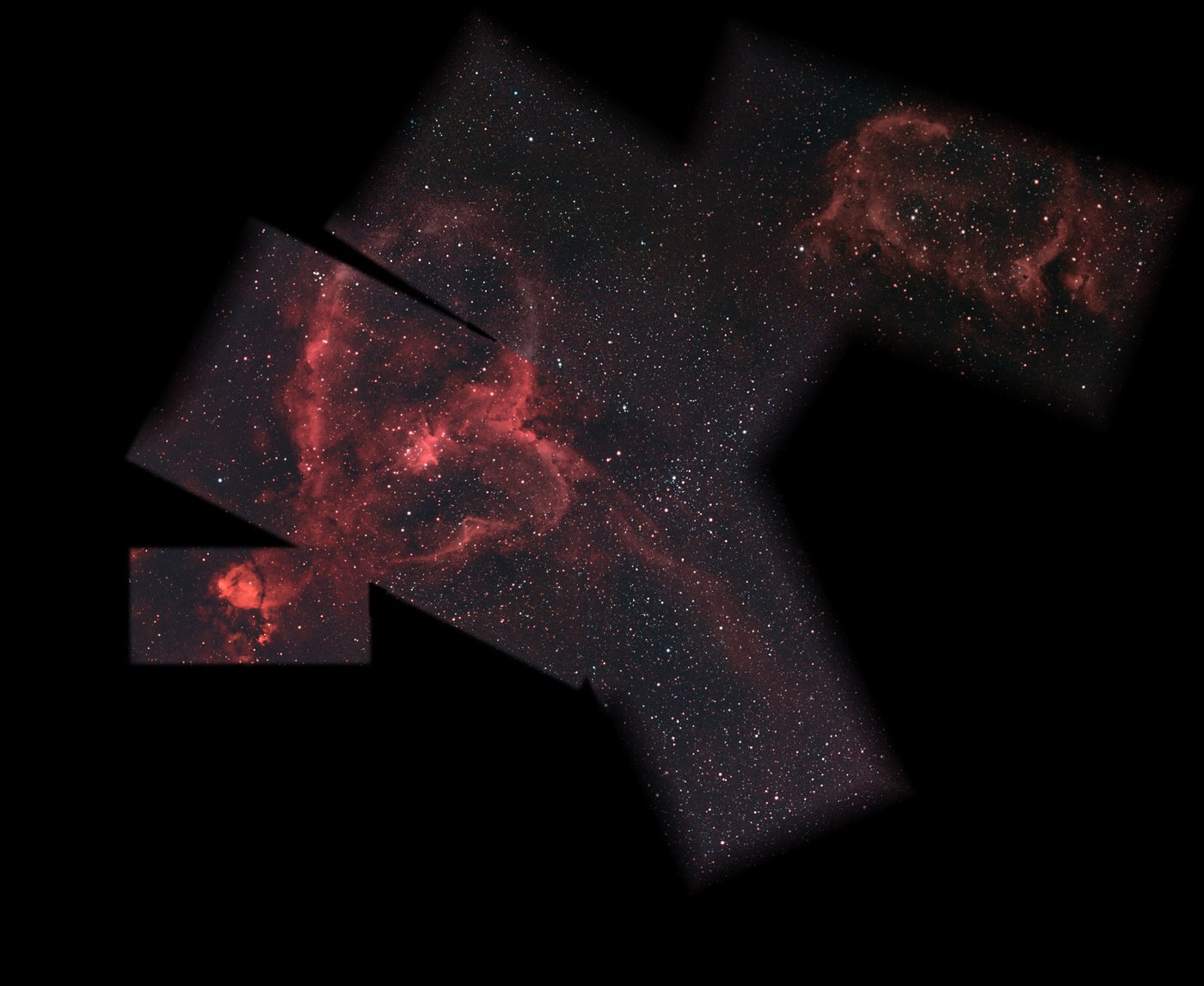
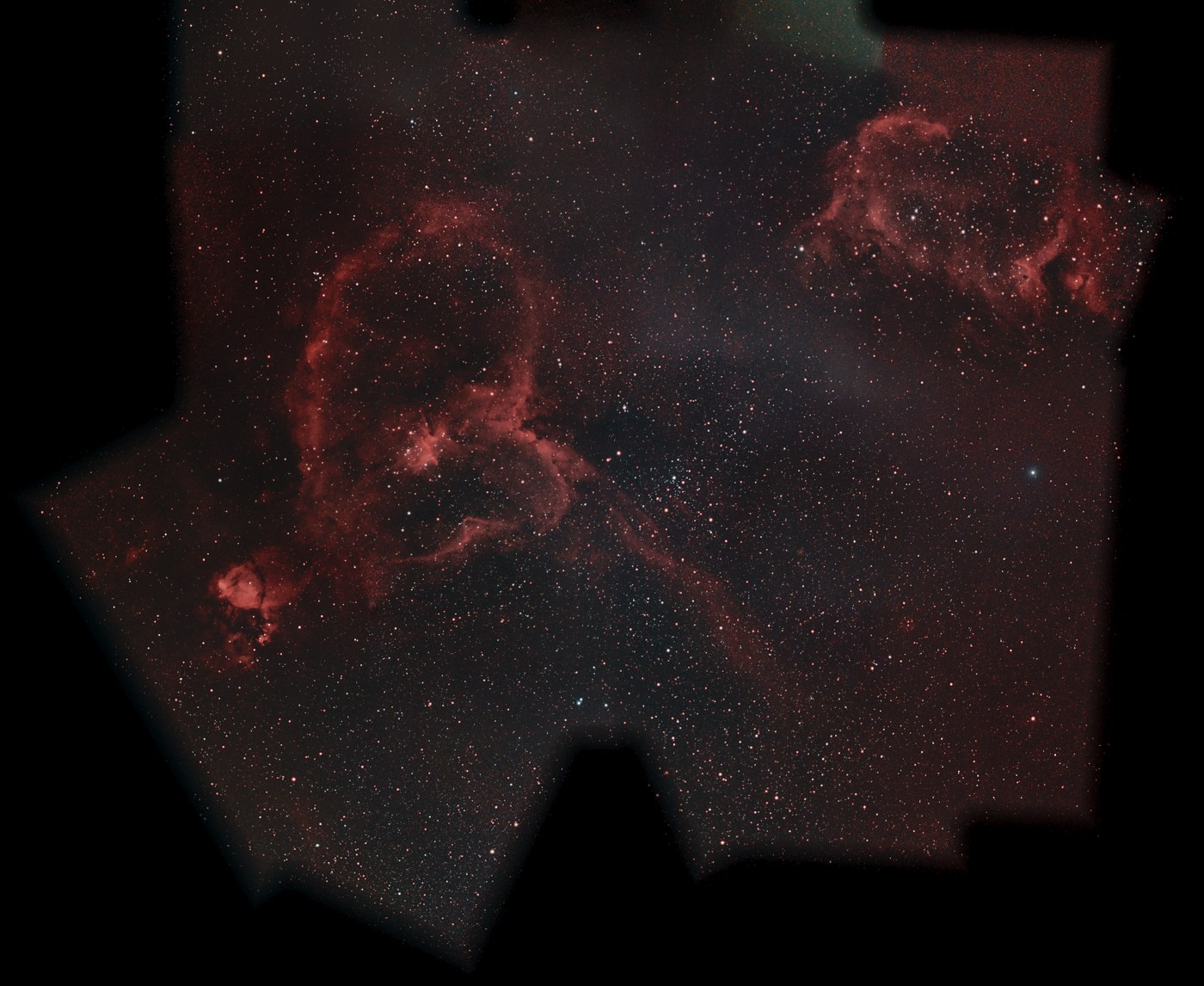
The Heart (IC 1805, at left) and the Soul (IC 1848, upper right) are two bubbles blown in the same giant cloud of hydrogen in the Perseus spiral arm, roughly 6,500 to 7,500 light-years away. Side by side they span about four degrees of sky, eight full moons, far more than one frame of a 50 mm telescope can hold.
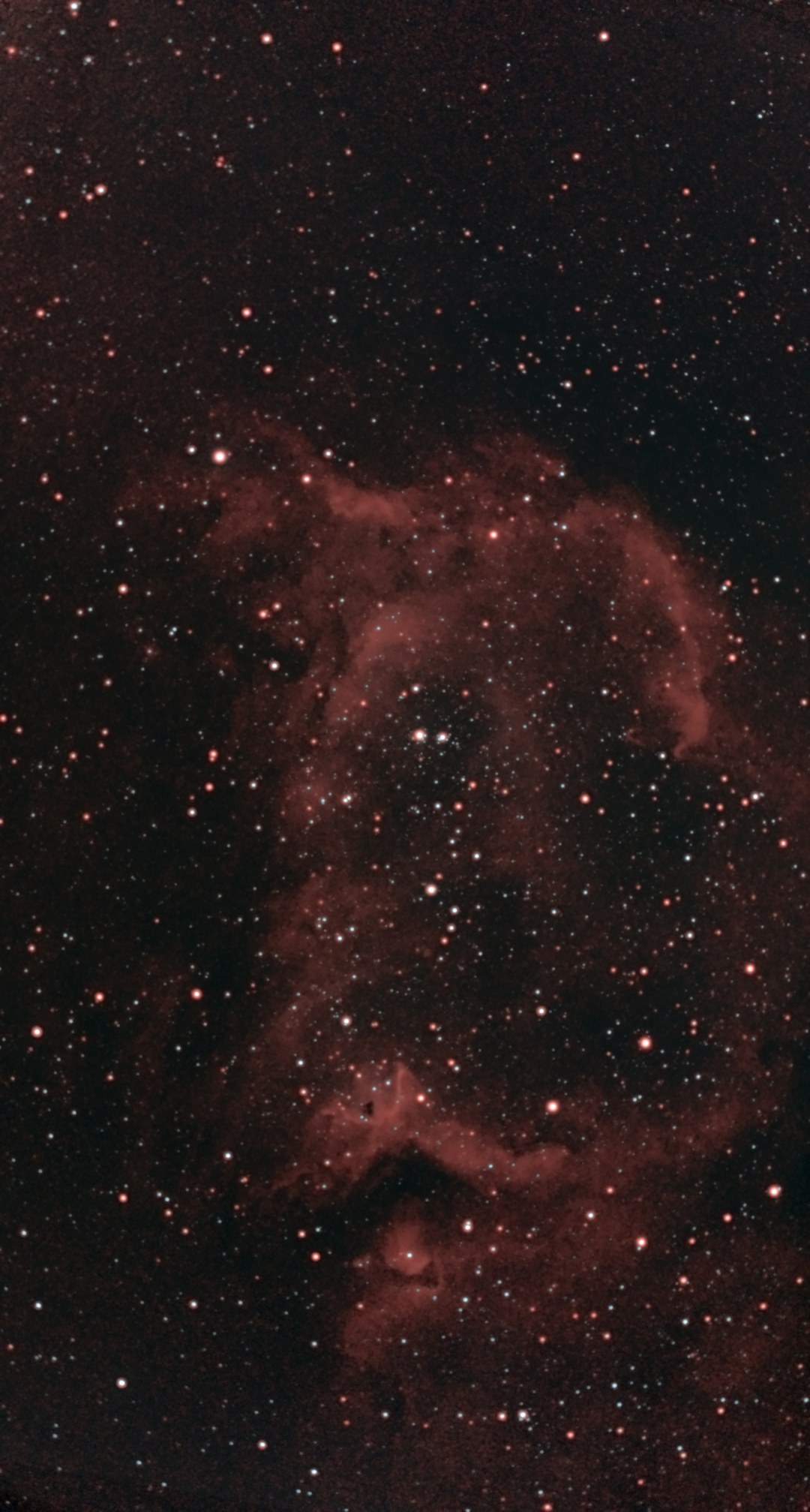
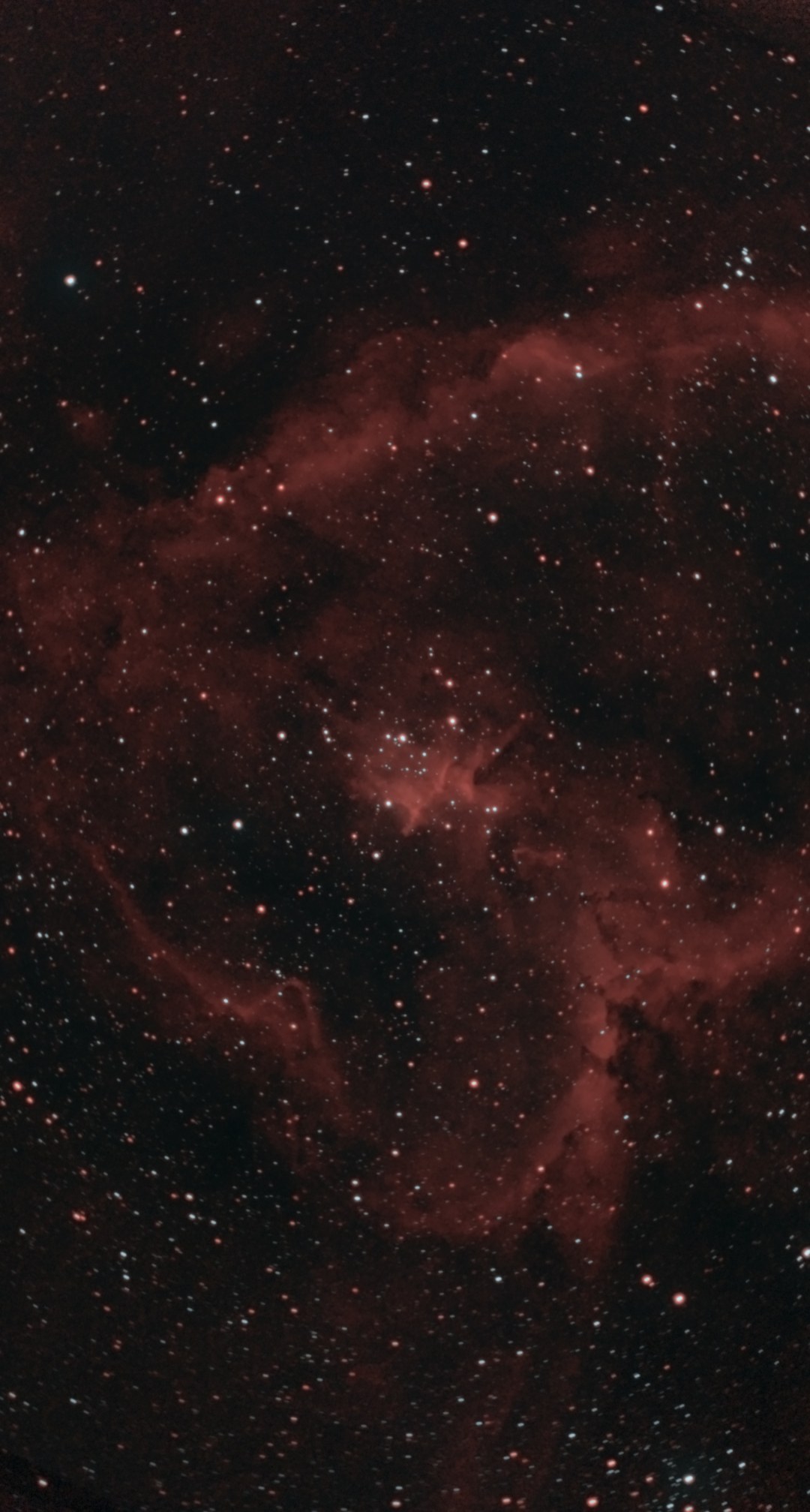
Each bubble is the work of a young star cluster: Melotte 15 in the Heart, IC 1848 in the Soul. Their ultraviolet light makes the hydrogen glow red, and their winds have pushed the gas into the shells and pillars you can trace across the panels.
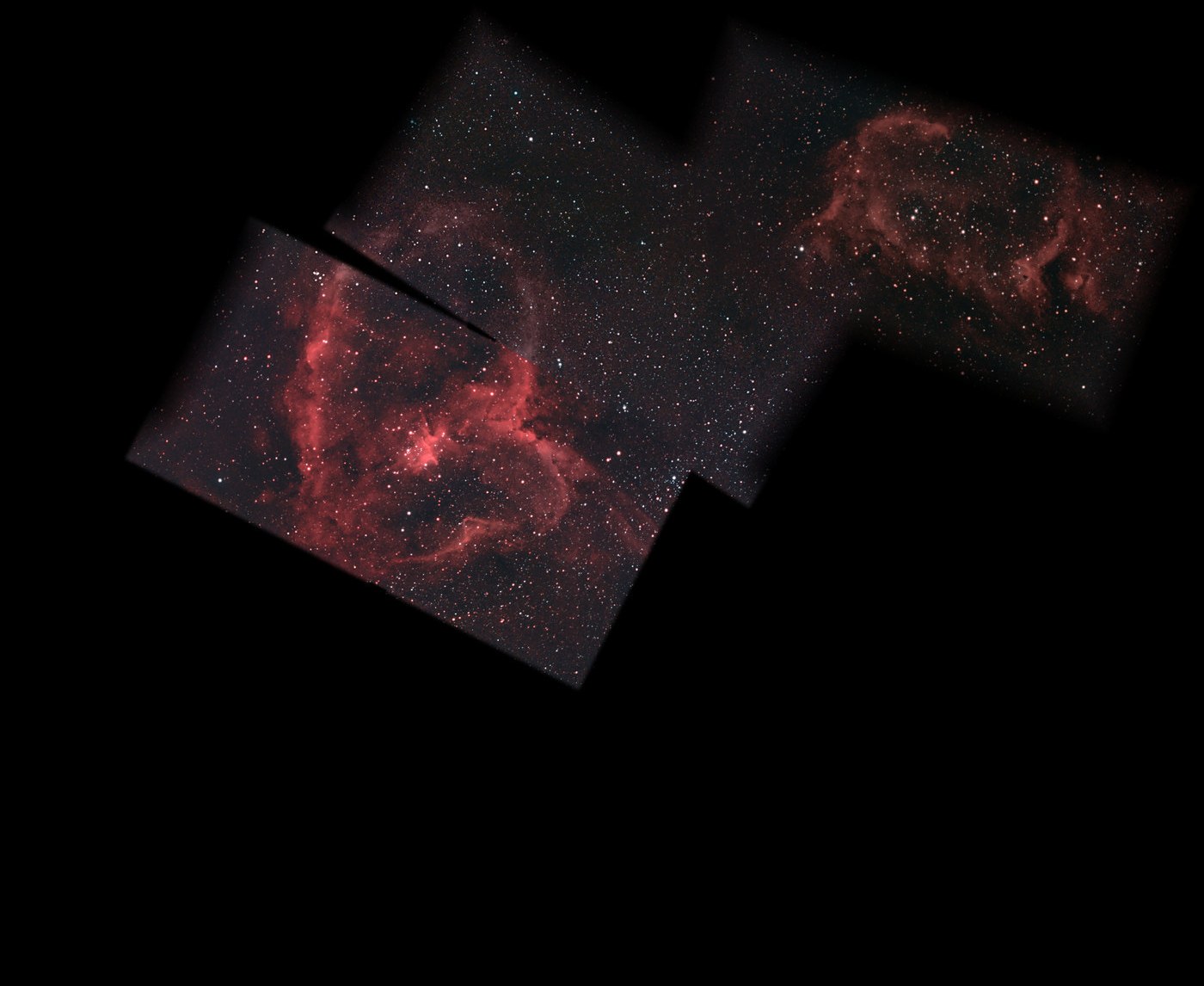
The bridge panel in the middle is mostly star field, and that's the point: it's the gap between two star factories. Faint nebulosity from both bubbles reaches into it from each side.
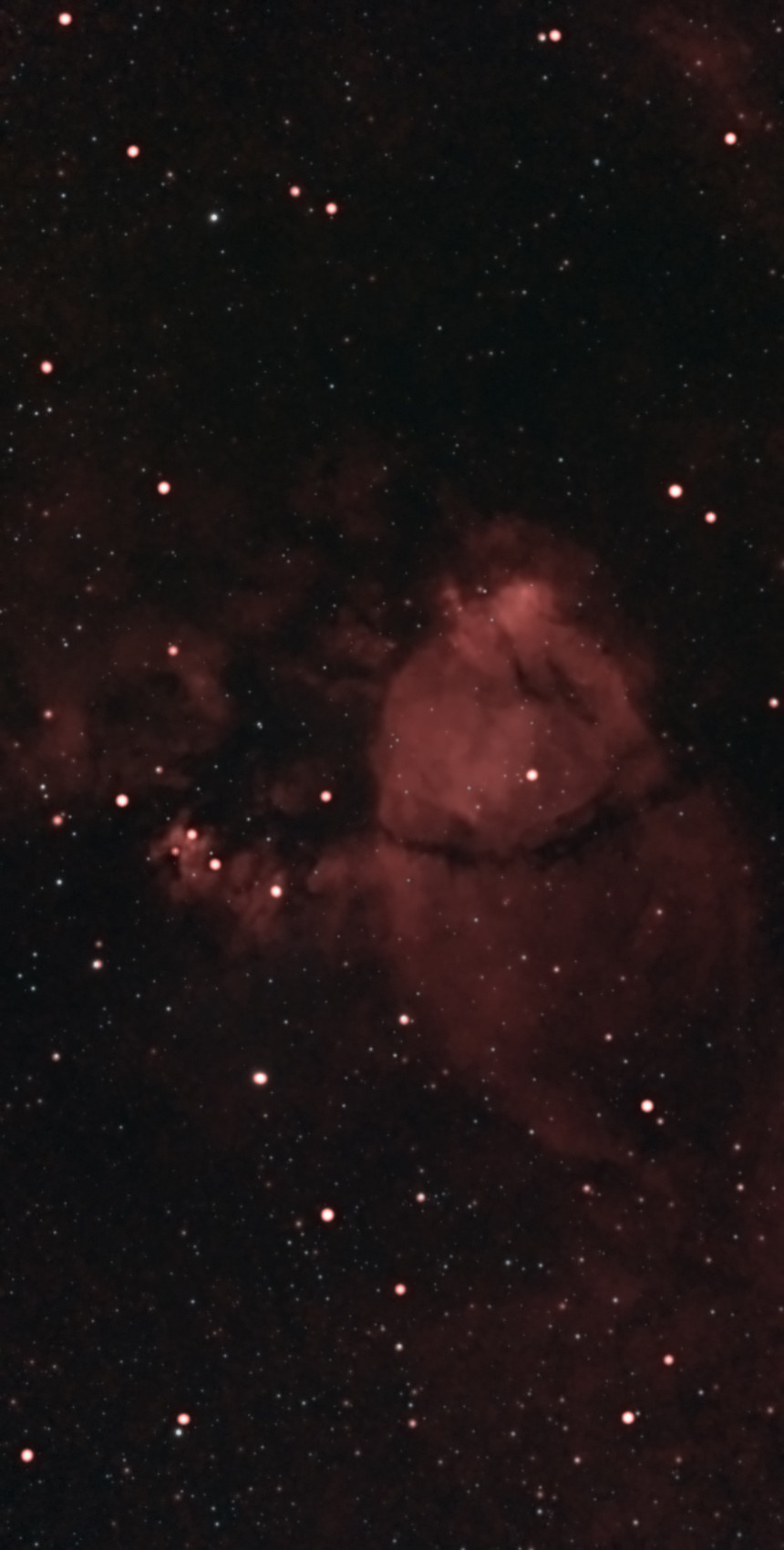
The bright knot at lower left, against the Heart, is the Fishhead, part of a region radio astronomers call W3. It's the youngest piece of the complex: dense, dusty and still forming stars, likely squeezed into collapse by the Heart's expanding bubble next door. Read from the upper right to the lower left, the mosaic runs from a bubble blown wide open, to one in full swing, to a cloud still forming stars.
The lesson
The first version of this mosaic said there was a gap between the panels and asked for a fourth one. There wasn't. The software placing the frames had been confidently wrong for a week, lining up star patterns that only looked like a match, and every check I'd been running quietly assumed the answer it was checking.
The fix was an outside reference: a catalog of a billion stars measured by a spacecraft. Against that, the error was obvious in minutes, and so was the truth: the three panels already touched.
Pilots call it a cross-check. An instrument can't verify itself, however good its readout looks. Before you commit to the fourth panel, the extra hire or the second campaign, check the reading against something that doesn't share its assumptions.
How this mosaic came together
Each stage below is a real night of shooting. The first two panels I shot myself; from the bridge on, the telescope robot planned and shot the panels overnight. Tap a date to see the mosaic as it stood that morning. Every stage is turned south up, like the finished frame.
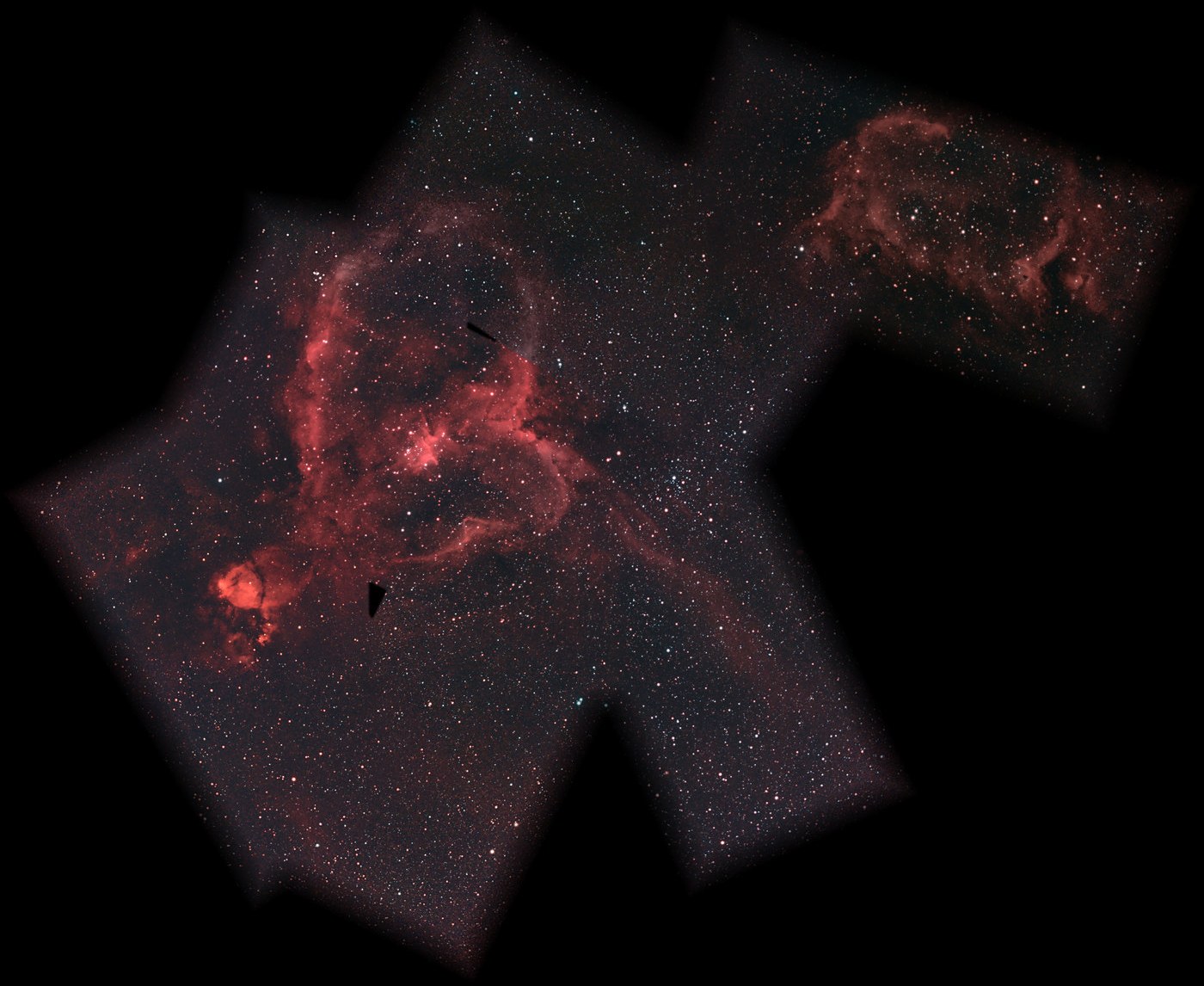
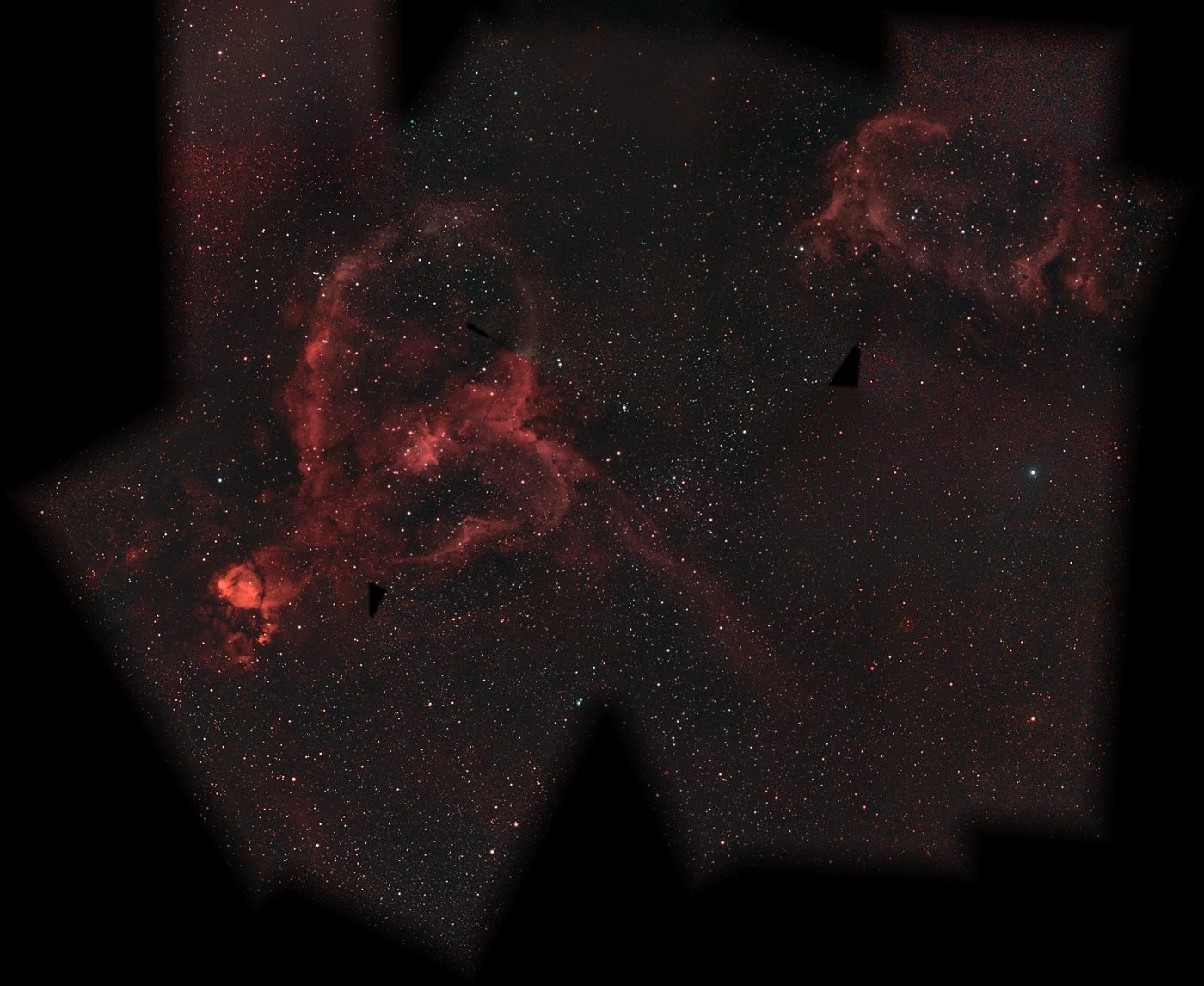
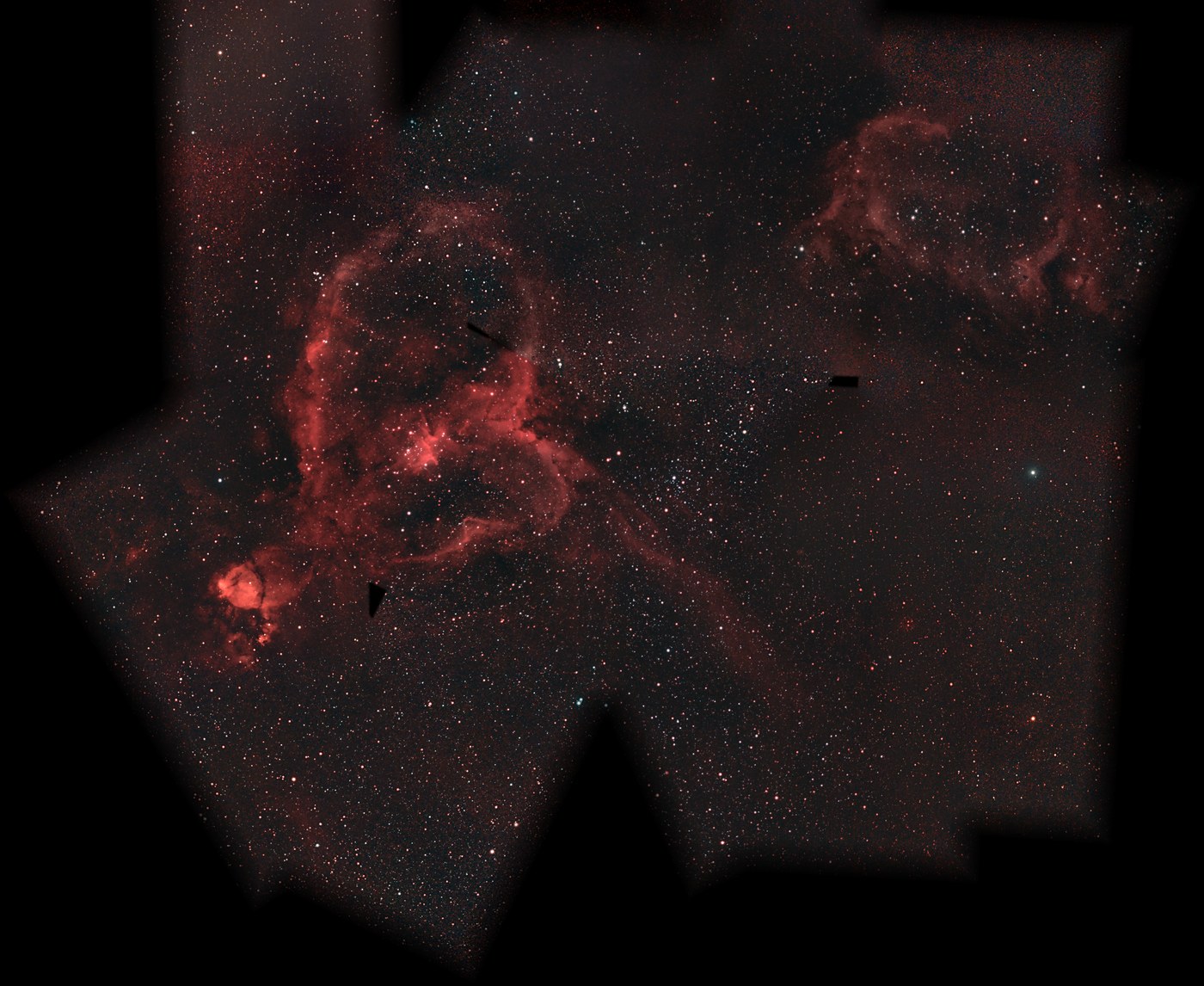
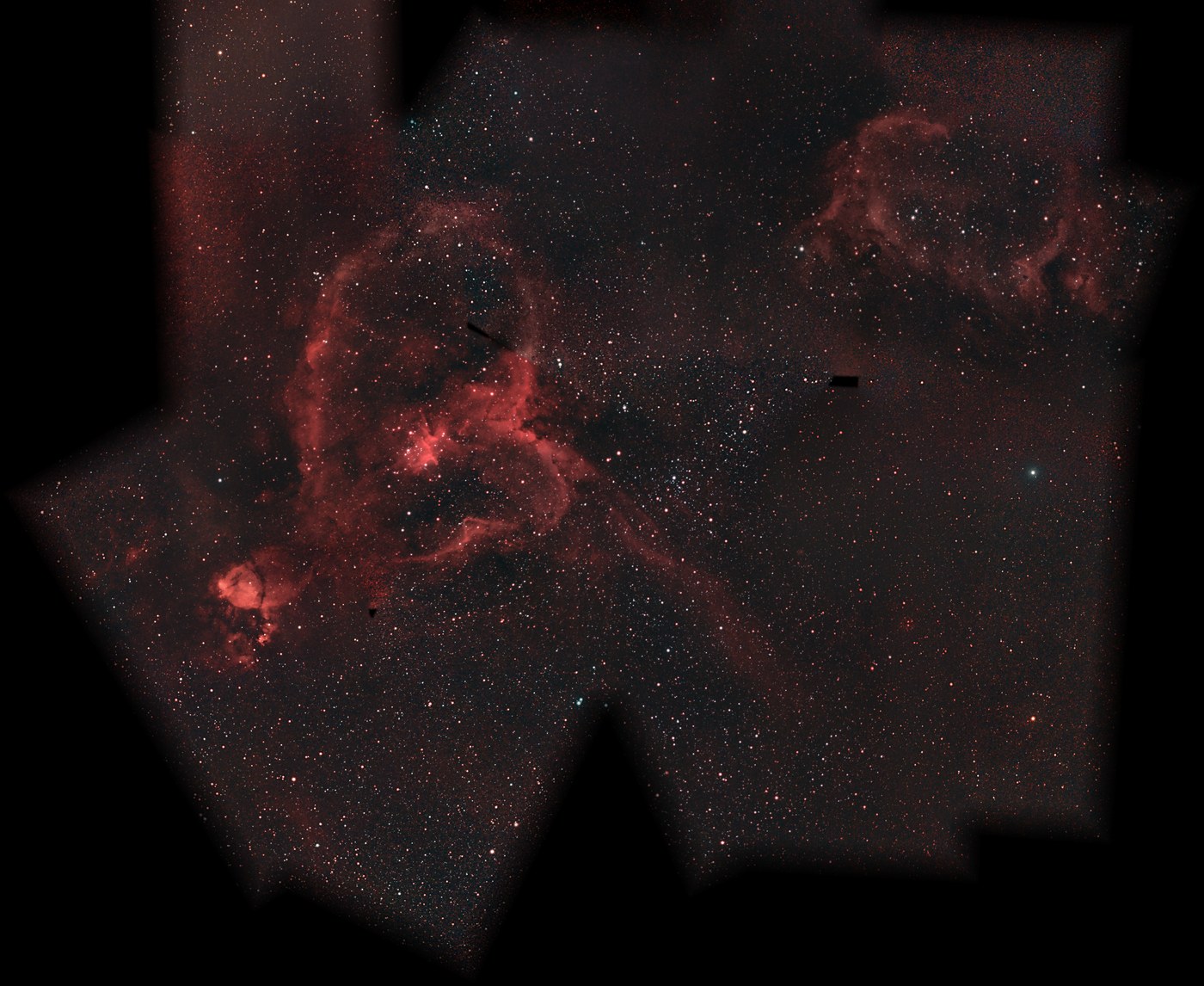
Zoom in on The Heart & Soul
Closer looks at pieces of this mosaic, each with its own page and story.
One photo. One lesson.
New entries land when the sky cooperates. Get them by email, plus the Sitreps jobs newsletter — no schedule, no spam. Unsubscribe from either one anytime.
Object data
- Objects
- IC 1805 (Heart) · IC 1848 (Soul) · IC 1795 (Fishhead, in W3)
- Constellation
- Cassiopeia
- Panels
- 18: Heart, Soul, bridge, Fishhead, two north of the Heart, Fishhead side, gap-filler, five equatorial-mode panels and five fills
- Total integration
- 2,170 minutes (36.2 hours) over nine nights
- Field
- About 4° × 3° of sky, south up
- Placement
- Each panel plate-solved against the Gaia DR3 star catalog