Sitreps Astronomy
Orion — from the Horsehead to the Sword
A living entry: five panels and four nights so far, with the core still to be re-blended
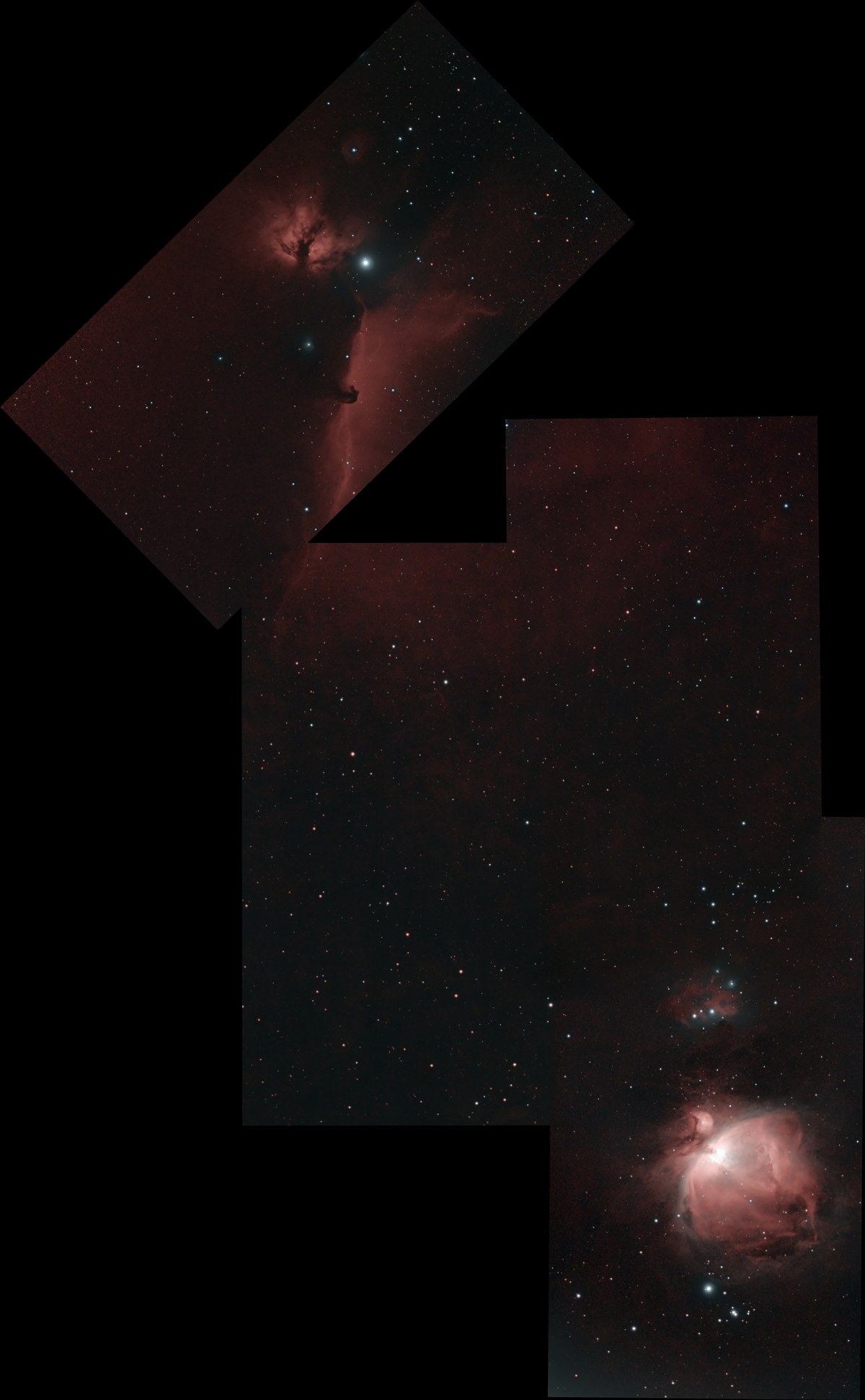
 Eva (ZWO Seestar S50 Pro)
What you're looking at
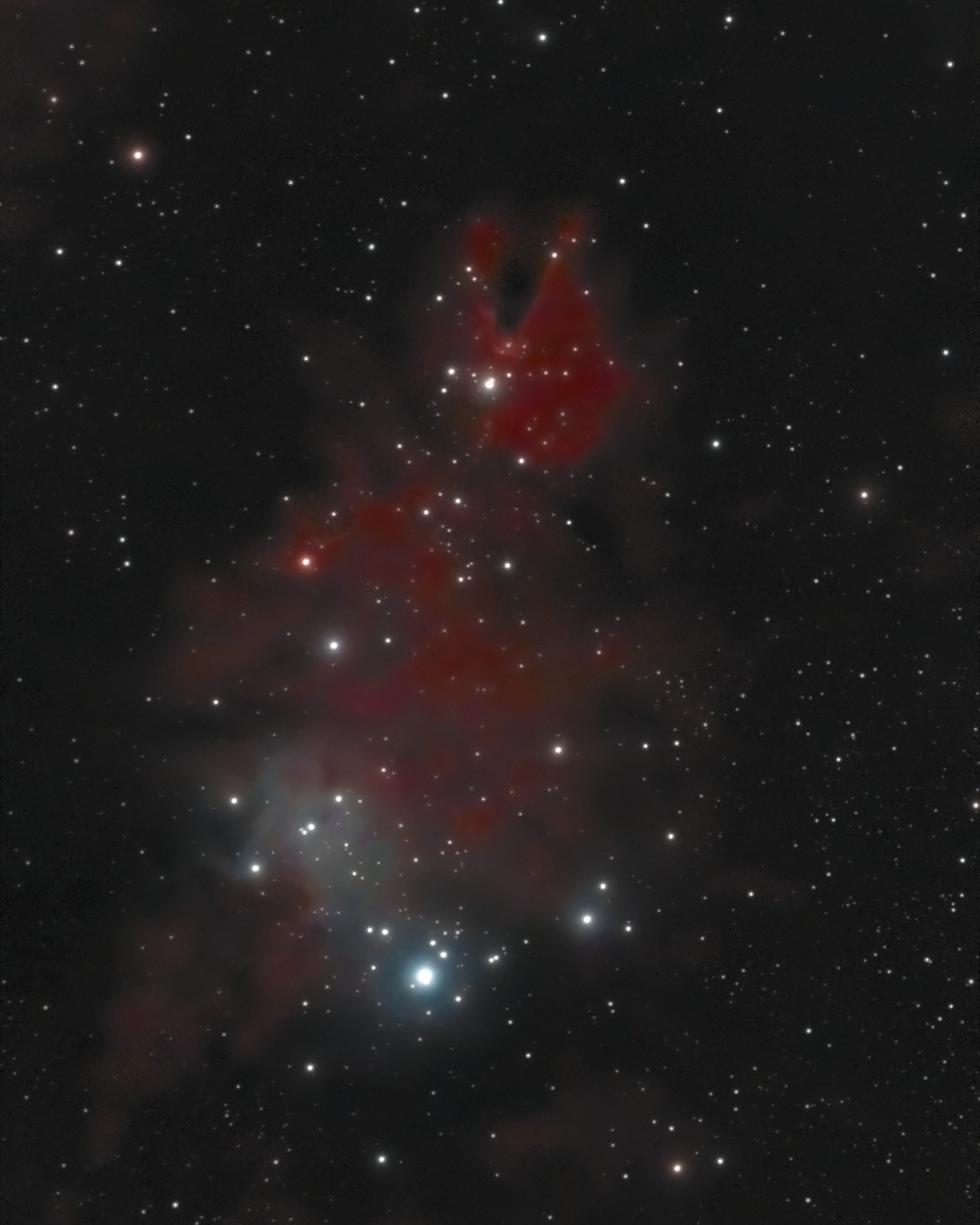
This frame runs about five degrees, ten full moons, from Orion’s Belt down into his sword. At the top is Alnitak, the eastern star of the Belt, with the Flame Nebula beside it and the Horsehead, a cold dust cloud seen in silhouette against glowing hydrogen.
At the bottom is the Orion Nebula, about 1,350 light-years away, the nearest large region of new stars to Earth. The fainter glow just above it is the Running Man Nebula.
The Horsehead and the Orion Nebula are pieces of one structure, the Orion molecular cloud complex, a reservoir of gas and dust far larger than this frame. The dim red haze in the middle panels is faint hydrogen glow from that cloud, lit by the hot young stars of the Belt and the sword.
The lesson
Two of these five panels began as single pictures with their own pages, shot in the ten days before this mosaic existed. They turned out to be the corners of something bigger.
The first version went up with its gaps showing on purpose. A draft with visible holes tells the next night exactly where to point, and the next night did: the notch beside the Horsehead is now filled. A finished-looking picture that hides its holes never gets that second night.
One photo. One lesson.
New entries land when the sky cooperates. Get them by email, plus the Sitreps jobs newsletter — no schedule, no spam. Unsubscribe from either one anytime.
Object data
- Objects
- B33 (Horsehead) · NGC 2024 (Flame) · Alnitak (ζ Ori) · NGC 1977 (Running Man) · M42 · M43
- Constellation
- Orion
- Panels
- 5 so far: Horsehead and Flame, three robot-shot bridge panels, Orion Nebula widefield (two nights)
- Total integration
- 672 minutes (11.2 hours) over four nights
- Field
- About 3.3° × 5.4° of sky, north up
- Placement
- Each panel plate-solved against the Gaia DR3 star catalog