NGC 891 — A Galaxy Seen Edge-On
A living entry: the Milky Way as an outsider would see it
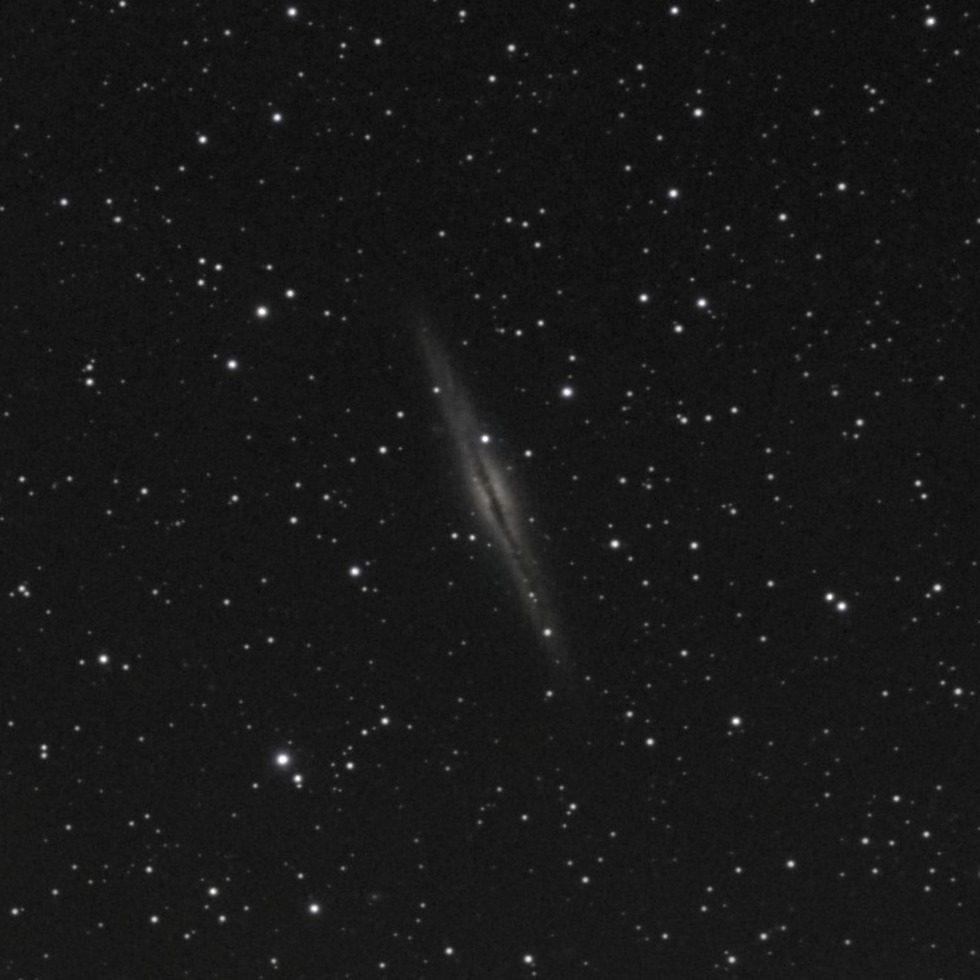
 Darth Vader (ZWO Seestar S50)
What you're looking at
NGC 891 is a spiral galaxy about 30 million light-years away in Andromeda, turned almost exactly edge-on to us. It is close to the Milky Way in size and type, which makes it the best picture we have of what our own galaxy would look like from far outside.
The dark line through the middle is dust: grains of carbon and silicate in the galaxy’s disk, blocking the starlight behind them. It is the same dust that makes the dark rifts in the Milky Way on a summer night.
Deep images show the dust is not confined to a flat sheet. Filaments of it rise thousands of light-years above and below the disk, thrown up by supernovae and star formation.
The lesson
We can never photograph the Milky Way from outside. We are inside it, and the nearest vantage point is farther than anything we will ever send.
So astronomers use stand-ins: galaxies like this one, close enough in type that what we learn from them transfers. NGC 891 has done that job for a century.
When you can’t step outside your own situation, find someone else’s that looks like it from the outside, and study that.
One photo. One lesson.
New entries land when the sky cooperates. Get them by email, plus the Sitreps jobs newsletter — no schedule, no spam. Unsubscribe from either one anytime.
Object data
- Catalog
- NGC 891 · Caldwell 23
- Constellation
- Andromeda
- Type
- Spiral galaxy, seen edge-on
- Distance
- ~30 million light-years
- Size
- About the size of the Milky Way
- Discovery
- 1784 · William Herschel
- Status
- LIVING ENTRY — 2.9 hours from one night, deepening this week